Hozelock metal fittings guide for hose connectors, taps and repairs
What Hozelock metal fittings are used for
Hozelock metal fittings are the metal-reinforced or all-metal versions of the brand’s quick-connect garden hose components. They are most useful where a hose is connected and disconnected often, where a tap fitting stays outdoors, or where a plastic connector is wearing at the thread, sleeve or grip points.
The buying decision is not simply “metal versus plastic.” The fitting still has to match the tap thread, hose diameter and connector position. Product information from Hozelock describes metal tap connectors made from nickel-plated brass, while metal hose end connectors use a metal sleeve with engineering plastic parts. In practice, Hozelock metal fittings can improve durability at high-wear points, but they will not fix leaks caused by the wrong size, missing washers, poor hose insertion or worn O-rings.
For garden watering, hose reels, pressure washer feeds or maintenance work, the safest approach is to map the full connection path before buying: tap, tap connector, hose end connector, hose, accessory-end connector and final watering tool.
How the Hozelock quick-connect system fits together
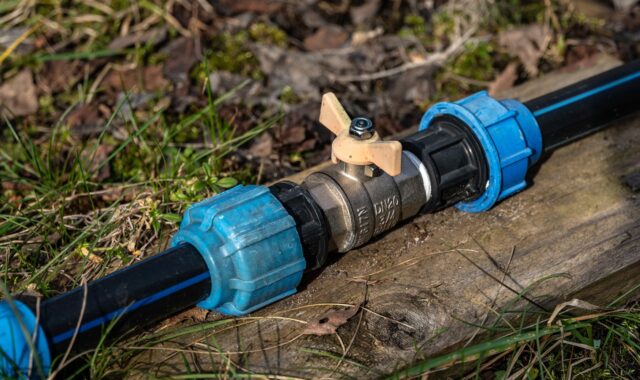
Hozelock’s garden hose system is built around push-fit connections. A threaded tap connector screws onto the outdoor tap and provides a male quick-connect outlet. A hose end connector clamps onto the hose and clicks onto that outlet. At the far end of the hose, another connector attaches to a spray gun, sprinkler, lance or other accessory.
The normal connection sequence is:
- Outdoor tap: usually a threaded garden tap, although thread size varies.
- Tap connector: converts the threaded tap into a quick-connect outlet.
- Hose end connector: clamps onto the hose and clicks onto the tap connector.
- AquaStop connector: commonly fitted at the accessory end so water flow stops when the accessory is disconnected.
- Watering accessory: a gun, nozzle, sprinkler, brush or pressure washer inlet, depending on the setup.
This layout matters because many leaks and pop-offs happen when the right product is fitted in the wrong position. Hozelock support guidance distinguishes between a hose end connector and an AquaStop connector, and notes that a hose end connector should be used at feeder-hose positions where a stop valve is not required. That detail is easy to miss when two fittings look similar on a shelf.
Main types of Hozelock metal fittings
The metal range is not a single part. It includes tap connectors, hose connectors, stop connectors, repair pieces and male adaptors. The table below summarizes the practical differences a buyer should check before choosing.
| Fitting type | Typical role | Common size points | What to check before buying |
|---|---|---|---|
| Metal threaded tap connector | Converts an outdoor threaded tap to the Hozelock quick-connect system | 1/2 inch BSP and 3/4 inch BSP versions are commonly referenced in product information | Tap thread size, washer condition and whether the tap is actually threaded |
| Metal hose end connector | Connects the hose to the tap connector or another male connector | Hozelock product listings commonly separate 12.5–15 mm hose and 15–19 mm hose versions | Outside hose diameter, hose wall condition and whether the connector is fully clamped |
| Metal AquaStop connector | Stops water flow when an accessory is removed | Usually selected by hose diameter, similar to hose end connectors | Best placed at the accessory end, not used as a substitute for every connector |
| Metal hose repair connector | Joins two cut hose ends after removing a damaged section | Selected by hose diameter | Both hose ends should be cut square and pushed fully into the connector |
| Double male connector | Joins two female quick connectors or extends a hose setup temporarily | Quick-connect compatibility is more important than hose diameter | Use as a connector, not as a permanent repair for a damaged hose wall |
Some tap connector descriptions refer to nickel-plated brass for strength, scratch resistance and outdoor durability. Metal hose end connectors are often hybrid parts: the outer sleeve may be die-cast metal, while the internal gripping and sealing areas still rely on engineered plastic and rubber seals. That is not a drawback; it is how many garden quick-connect fittings balance grip, sealing performance and handling comfort.
Metal versus plastic fittings in real use
The main advantage of metal fittings is better resistance at exposed or high-contact points. A tap connector sits outdoors, is often knocked by watering cans or hose reels, and may be tightened or removed repeatedly. A metal sleeve on a hose end connector also feels more robust when the hose is dragged across paving or used in shared maintenance areas.
Metal, however, does not make the whole watering system indestructible. The seal still depends on washers, O-rings and correct engagement between male and female parts. If the hose is too narrow, too soft, cracked or not inserted fully, a metal connector can still leak or blow off. If the tap thread is damaged, cross-threaded or the wrong size, a metal tap connector may make the problem more obvious because it will not deform like a cheaper plastic part.
Plastic fittings still make sense for light domestic watering, temporary setups or low-cost replacement where the connector is sheltered and rarely removed. Metal fittings make more sense for:
- outdoor taps exposed to weather, knocks and frequent hose changes;
- gardeners who swap between guns, sprinklers and pressure-washer feed hoses;
- maintenance teams using hose reels or carts several times a week;
- repair points where a stronger body is helpful after cutting out a damaged hose section;
- users who have had plastic sleeves crack, scuff or loosen under repeated handling.
The practical rule is straightforward: choose metal where durability is the limiting factor, but solve sizing and sealing problems first.
Compatibility checks before you buy
Before buying Hozelock metal fittings, check four things: tap thread, hose diameter, connector position and water-use context. These checks prevent most avoidable returns and leaks.
Check the tap thread
Outdoor taps are commonly described by BSP thread sizes, including 1/2 inch and 3/4 inch. A 3/4 inch outdoor tap connector with a 1/2 inch adaptor is widely sold for garden taps, but that does not mean every older or imported tap is automatically compatible. Remove any old adaptor, inspect the thread and measure the outside diameter if the fitting does not start cleanly by hand.
A connector should screw on smoothly before it is tightened. If it binds after one turn, stop and re-check the thread. Forcing a metal connector onto the wrong thread can damage the tap, the connector or both.
Match the hose diameter
Hozelock metal hose end connectors are commonly offered for 12.5 mm, 15 mm and 19 mm hose ranges. This matters because the connector grips the hose mechanically. A connector that is too large may not clamp the hose properly, while one that is too small can deform the hose or prevent full insertion. See also: Buying Guides.
If the hose size is not printed on the hose wall, check the hose packaging or compare it with the old connector specification. Do not choose by color or brand name alone.
Use AquaStop in the right place
An AquaStop connector is useful at the accessory end because it stops flow when a spray gun or sprinkler is removed. That prevents water running out of the hose while accessories are changed. It is not always the correct connector at the tap end or on a feeder hose. If a connector keeps popping off, confirm that the fitting type matches the position, not just the hose diameter.
Consider backflow protection for pressure washers
For pressure washer use, the connector question is not only whether the hose clicks on. Hozelock support material distinguishes a non-return tap connector from a standard stop connector because backflow protection is intended to reduce the risk of contaminated water returning toward the mains supply. Users should also follow the pressure washer manufacturer’s inlet instructions and local plumbing requirements.
Installation steps that reduce leaks
Most fitting failures come from small installation errors rather than from the metal body itself. A careful installation takes only a few minutes.
- Turn off and depressurize the hose. Open the spray gun or nozzle after closing the tap so pressure is released before removing fittings.
- Clean the tap thread. Remove dirt, grit and old seal fragments. Check that the sealing washer is present and seated flat.
- Start threaded fittings by hand. A tap connector should turn smoothly. Use only gentle final tightening if needed.
- Prepare the hose end. Cut away cracked, swollen or oval hose ends. A square cut helps the connector grip evenly.
- Insert the hose fully. On hose end connectors, loosen the tail, push the hose into the grip area and then tighten the tail securely.
- Test under low flow first. Turn the tap on slowly and look for seepage at the thread, the hose grip and the quick-connect joint.
- Replace small seals when needed. A worn O-ring or washer can make a good metal fitting look faulty.
Avoid overtightening as the default response to a leak. If water appears at the tap thread, the washer or thread match is usually the first thing to inspect. If water appears at the quick-connect joint, check the O-ring and make sure the connector has clicked fully into place.
When metal fittings are worth the upgrade
Metal fittings are worth considering when the existing connector fails because of impact, repeated handling, outdoor exposure or thread wear. They are less likely to be a meaningful upgrade if the real problem is a poor hose end, a non-standard tap, a missing washer or misuse of an AquaStop connector.
For trade counters, garden maintenance teams and property managers, the value is often consistency. Fewer damaged tap connectors and stronger repair fittings can reduce small but repeated maintenance interruptions. For homeowners, the benefit is usually most obvious at the tap end and at the accessory end, where fittings are handled most often.
If you are comparing broader hardware options, related guides and category resources can be found in the Metal Fittings section. The practical takeaway is to upgrade the highest-stress connection points first rather than replacing every fitting at once.
Frequently asked questions
Are Hozelock metal fittings compatible with plastic Hozelock connectors?
In the same quick-connect system, metal and plastic Hozelock-style components are generally designed to click together when the connector type and size are correct. Compatibility still depends on the exact product, the condition of the O-rings and whether the fitting is being used in the correct position.
What size tap connector do I need for an outdoor tap?
Many outdoor threaded taps use 3/4 inch BSP connectors, while some older taps use 1/2 inch BSP. Do not rely on appearance alone. Check the existing fitting, measure the thread or choose a connector that includes the correct adaptor for your tap type.
Will metal fittings stop hose leaks?
They can help when the old fitting is cracked, loose or damaged, but they do not automatically stop every leak. Leaks often come from worn washers, damaged O-rings, badly cut hose ends, wrong hose diameter or cross-threaded tap connectors.
Where should an AquaStop connector be fitted?
An AquaStop connector is normally most useful at the accessory end of the hose, where it stops water when a spray gun, nozzle or sprinkler is disconnected. At the tap end or on feeder hoses, a standard hose end connector may be the correct choice depending on the setup.
Can Hozelock metal fittings be used with a pressure washer?
They can be used where the pressure washer accepts a compatible garden hose feed, but the inlet requirements of the pressure washer still matter. For tap-side safety, use the correct non-return connector where backflow protection is required and follow the washer manufacturer’s instructions.