Paper fasteners explained for offices, files, and light-duty binding
What paper fasteners are and why the term can mean several products
Paper fasteners are small devices used to secure loose sheets, file folders, reports, forms, and other paper-based records. In everyday office use, the term can refer to split-pin brads, two-prong file fasteners, paper clips, binder clips, staples, or metal slide fasteners. For purchasing and specification work, that distinction matters. Each product offers a different balance of holding strength, removability, sheet capacity, and document risk.
The main decision is not simply metal versus plastic. It is whether the paper stack needs temporary grouping, frequent updating, neat file compression, or semi-permanent binding. A paper clip is easy to remove but has limited grip. A staple is compact and inexpensive, but it pierces the sheets. A prong fastener works well for thicker files and two-hole punched folders, but it requires the correct hole pattern and takes more time to use.
For readers comparing fastening options beyond paper handling, the broader fasteners category includes related discussions of fastening formats, materials, and selection principles.
Main types of paper fasteners
The paper fastener market uses several overlapping names. Clear terminology helps prevent ordering errors, especially when product descriptions mention capacity, center-to-center spacing, compressor bars, or archival use.
Brads and split-pin fasteners
A brad, often called a brass fastener or split pin, has a round head and two flexible legs. The user pushes the legs through punched paper and bends them outward on the back side. Brads are common in schools, craft work, forms, envelopes, light file packets, and simple rotating paper mechanisms such as charts or learning materials.
Brads are simple and low cost, but they are not the best choice for files that must be opened and closed many times. Repeated bending can weaken the legs, and the head creates a raised point in the stack. For thin packets and temporary assembly, however, a brad remains one of the easiest paper fasteners to understand and apply.
Two-prong file fasteners
Two-prong file fasteners are widely used in offices, legal files, medical records, and administrative folders. A typical set includes a base with two prongs and a compressor bar that slides over the prongs to hold a two-hole punched paper stack. Many catalog descriptions specify 2.75-inch center-to-center spacing and capacities such as 1 inch or 2 inches, although exact dimensions vary by product line.
The two-piece design has a practical advantage: users can add or remove sheets while keeping the file relatively flat and compressed. This makes prong fasteners useful for active records that grow over time. The trade-off is that the paper must be punched consistently, and the metal prongs can mark or tear sheets if the stack is handled roughly.
Paper clips and binder clips
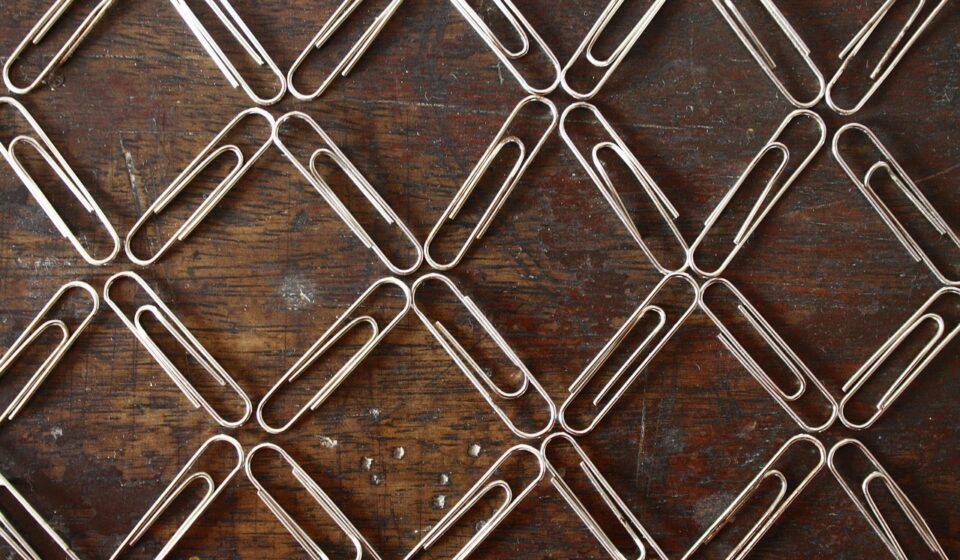
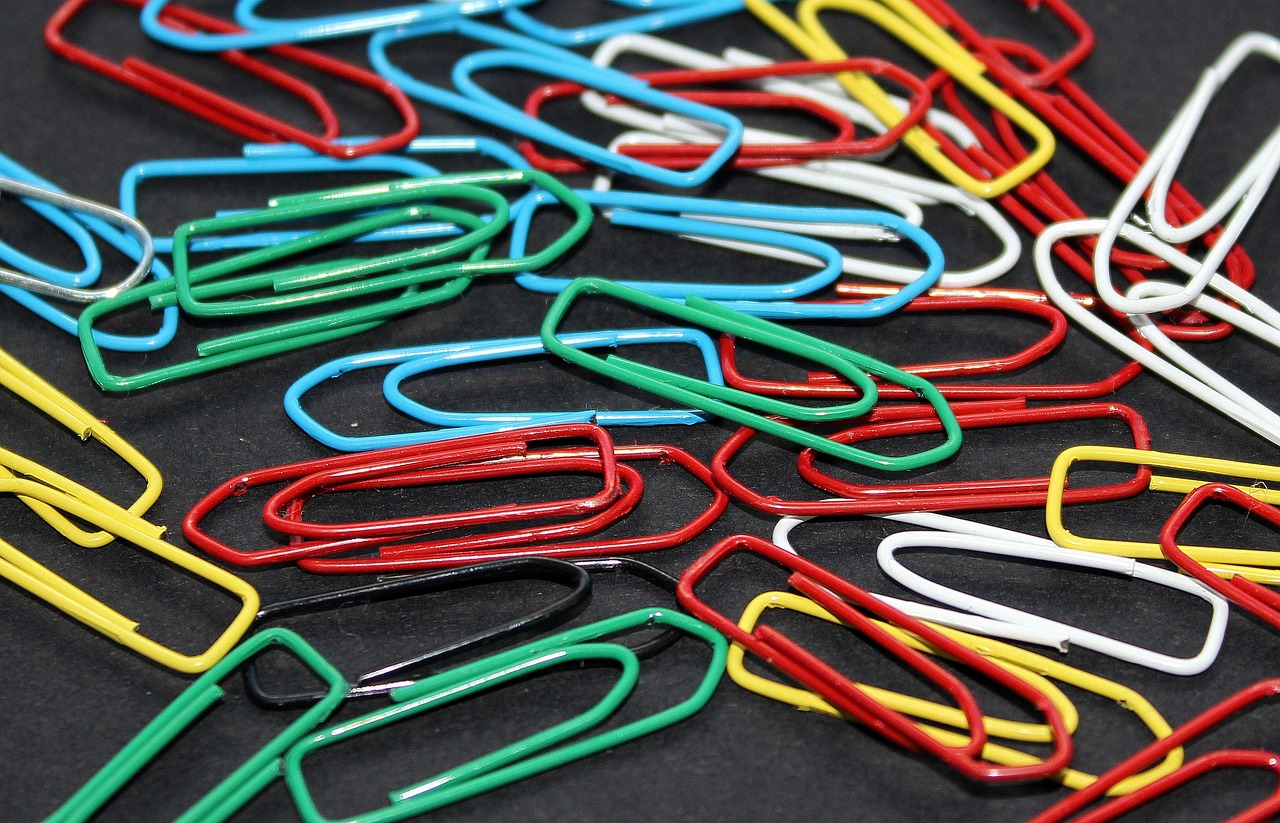
Paper clips and binder clips are temporary fasteners. They do not require punched holes, which makes them useful for drafts, forms awaiting approval, receipts, or grouped pages that should not be pierced. Binder clips provide more clamping force than standard paper clips, but they can also leave pressure marks if left on paper for long periods.
Preservation guidance from organizations such as the Library of Congress, the U.S. National Archives and Records Administration, and the National Park Service generally treats ordinary clips and similar office fasteners with caution for long-term collections. The issue is not that every clip immediately damages paper. Rather, pressure, corrosion, staining, and handling damage can accumulate over time, especially in poor storage conditions.
Staples and stitched fastening
Staples are among the most widely used paper fasteners because they are fast, inexpensive, and compact. They are suitable for short reports, invoices, internal memos, and handouts that do not need later revision. Unlike clips, staples pierce the paper, which helps keep pages from slipping out of order.
The main drawback is removability. A staple can tear pages when removed carelessly, and old staples may corrode. For documents expected to remain in storage for a long time, or for records that will be scanned later, staples can add handling time and damage risk.
Metal slide fasteners and file-folder mechanisms
Metal slide fasteners, sometimes used in file-folder assemblies, combine prongs, a base, and sliding locks or compressors. They are designed to organize thicker groups of paper more securely than a clip. These fasteners are common in office, government, and records-management settings where files need to stay in order during storage and retrieval.
They are stronger than many simple paper fasteners, but they also add bulk and place metal in direct contact with the document. For routine office files, that may be acceptable. For rare, fragile, or historically valuable records, preservation staff may instead choose foldering, sleeves, or other non-damaging enclosure methods.
How to choose the right paper fastener
Choosing the right paper fastener mainly depends on document life, update frequency, stack thickness, and whether holes are acceptable. The comparison below summarizes common use cases.
| Fastener type | Best use | Key advantage | Main limitation |
|---|---|---|---|
| Brad or split pin | Light packets, forms, crafts, rotating paper parts | Simple, low cost, easy to apply | Requires a hole and can weaken after repeated bending |
| Two-prong file fastener | Thick active files and two-hole punched documents | Higher capacity and good page order control | Needs correct hole spacing and careful handling |
| Paper clip | Temporary grouping of small stacks | No hole, quick removal | Limited grip and possible impressions or staining over time |
| Binder clip | Temporary grouping of thicker stacks | Strong clamping force | Bulky and may leave pressure marks |
| Staple | Short reports, memos, invoices, handouts | Compact, secure, economical | Pierces paper and can damage sheets during removal |
For active office files, the most practical options are usually staples for small fixed packets, clips for temporary grouping, and two-prong fasteners for thicker files that need later additions. For long-term or valuable records, the decision should be more conservative. Preservation sources often recommend minimizing direct contact from metal fasteners when documents are fragile, historically important, or expected to remain in storage for many years.
Material, finish, and capacity considerations
Paper fasteners are small, but their material details still affect performance. Many prong fasteners and clips are made from steel with a plated, coated, tin-finished, or corrosion-resistant surface. Brads are often described as brass or brass-plated, depending on the product. These descriptions are not interchangeable. Solid brass, brass-plated steel, stainless steel, and coated steel differ in cost, corrosion behavior, magnetic response, stiffness, and appearance.
For everyday filing, buyers usually focus on capacity and format. Common catalog specifications for two-prong file fasteners include the following details: See also: Buying Guides.
- Capacity: Often stated as 1 inch, 2 inches, or another stack height, not simply as a number of sheets.
- Center-to-center spacing: Frequently 2.75 inches for standard two-hole punched file use, though buyers should verify the folder and punch pattern.
- Set configuration: Some items include only the prong base, while others include both the base and compressor.
- Edge treatment: Coined or smoothed edges can reduce sharp handling points.
- Pack quantity: Office fasteners are commonly sold in boxes, often in quantities such as 50 sets or 100 pieces, depending on type.
Sheet count can be misleading because paper thickness varies. A 2-inch capacity does not always translate into the same number of sheets across copy paper, cardstock, forms, or mixed records. For purchasing, stack height is usually a more reliable specification than an estimated sheet count.
When paper fasteners can damage documents
Paper fasteners are useful, but they are not neutral in every setting. The risk depends on document value, storage time, humidity, paper condition, and how often the file is handled. Ordinary office paper may tolerate years of routine fastening. Brittle, acidic, torn, or historically significant paper may not.
Preservation guidance from the U.S. National Archives and Records Administration notes that office-quality fasteners such as staples, paper clips, binder clips, and metal slide fasteners do not always need to be removed automatically, but they should be evaluated when they obscure information or cause damage. National Park Service conservation guidance similarly treats fastener removal as a case-by-case decision rather than a universal rule.
The most common damage modes include:
- Corrosion staining: Metal clips, staples, and prongs may leave marks when exposed to moisture or poor storage conditions.
- Pressure deformation: Clips and binders can indent paper, especially during long storage under weight.
- Tearing around holes: Brads and prong fasteners concentrate stress around punched holes.
- Information obstruction: A fastener may cover text, signatures, seals, dates, or edge notes.
- Handling damage: Removing staples or bent prongs without support can tear paper fibers.
For routine office documents, these risks are usually manageable with correct sizing and careful handling. For permanent records, archival files, manuscripts, or legal originals, staff should follow the policy of the responsible records office or preservation professional.
Practical selection checklist for buyers and users
A good paper fastener selection process starts with the document, not the fastener. Before choosing a box of brads, clips, or prong sets, answer these questions:
- Is the stack temporary or permanent? Temporary groupings usually favor clips or folders. Permanent packets may use staples or prong fasteners when holes are acceptable.
- Will pages be added later? Growing files are better suited to prong fasteners or folders than staples.
- How thick is the stack? Match the stated capacity to actual stack height, allowing space for future additions.
- Can the paper be punched? If not, avoid brads and two-prong fasteners.
- Is long-term preservation important? If yes, consider non-metal enclosures, archival folders, or stainless options recommended by preservation staff.
- Will the file be scanned? Fasteners that require removal can slow scanning and increase the risk of tearing.
- Does the fastener need to look professional? Reports, proposals, and formal records may require a neater finish than internal drafts.
For offices that buy in volume, a mixed approach often works best: staples for short fixed sets, paper clips for temporary routing, binder clips for bulky temporary packets, and two-prong fasteners for active files. This avoids forcing one fastener type into every document workflow.
Paper fasteners in a broader fastener context
Paper fasteners are light-duty products, but they follow the same selection logic used across many fastening categories: load, removability, material compatibility, corrosion environment, installation method, and service life. A paper clip is not comparable to a structural bolt, but the underlying question is similar: what must the joint hold, for how long, and under what conditions?
For paper handling, the load is usually the weight and movement of a paper stack. The joint may need to be temporary, revisable, or secure enough for filing. The environment may be a dry office cabinet or a long-term archive where humidity, pressure, and chemical stability matter. Looking at paper fasteners this way helps buyers move beyond price alone and choose a fastening method that matches the document’s actual use.
Frequently asked questions
Are paper fasteners the same as brads?
Sometimes, but not always. In school and craft use, paper fastener often means a brad or split-pin fastener. In office and filing contexts, the term may also include prong file fasteners, clips, staples, and related devices.
What is a two-prong paper fastener used for?
A two-prong paper fastener is used to hold punched sheets inside a file, report, or folder. It is especially useful when the document stack is thick or when pages may be added later.
Are metal paper fasteners safe for archival documents?
They can be risky for long-term preservation. Preservation organizations generally advise evaluating metal fasteners for corrosion, staining, pressure damage, and obstruction of information. Valuable or fragile records should be handled according to archival guidance.
What does 2-inch capacity mean on a prong fastener?
It usually refers to the maximum stack height the fastener is designed to hold, not a fixed number of sheets. Actual sheet count depends on paper thickness, coatings, folds, and whether the file contains mixed materials.
Which paper fastener is best for files that change often?
For frequently updated files, a two-prong fastener or folder-based system is usually more practical than staples. It allows pages to be inserted or removed while maintaining order.