Types of surface finishes for metal and how to choose the right one
The main types of surface finishes for metal
The main types of surface finishes for metal can be grouped into four practical categories: mechanical finishes that smooth, reshape or texture the surface; chemical and electrochemical finishes that modify the surface layer; metallic or engineered coatings that add another material; and organic coating systems such as paint and powder coating. The right choice depends on what the finished part must do: resist corrosion, reduce friction, improve wear life, control roughness, create a decorative appearance, prepare for bonding, or meet a drawing requirement. A polished stainless panel, an anodized aluminum extrusion, a zinc-coated fastener and a powder-coated steel bracket can all be described as finished parts, but they are solving different problems. For related articles, visit the Surface Finishes section.
| Finish group | Common examples | Main purpose | Key limitation |
|---|---|---|---|
| Mechanical | Grinding, polishing, brushing, blasting, tumbling | Control texture, remove defects, improve appearance, prepare for coating | Usually does not provide long-term corrosion protection by itself |
| Chemical and electrochemical | Anodizing, passivation, phosphating, black oxide, chemical conversion coating | Modify the surface layer for corrosion resistance, adhesion or appearance | Strongly dependent on alloy, cleaning and process control |
| Metallic and engineered coatings | Electroplating, electroless nickel, galvanizing, thermal spray, PVD | Add wear, corrosion, conductivity or hardness performance | Thickness, adhesion and environmental controls must be specified |
| Organic coatings | Liquid paint, powder coating, e-coat, protective paint systems | Barrier protection, color, weathering resistance and appearance | Surface preparation and cure quality often decide performance |
Mechanical finishes change texture before they change chemistry
Mechanical finishing is often the first decision because it defines the texture a customer sees, touches and measures. It can also decide whether a later coating bonds properly. ASME B46.1 describes surface texture with terms such as roughness, waviness and lay, so drawings should not rely only on vague instructions such as “smooth” or “brushed.” If roughness matters, specify a measurable parameter such as Ra or Rz, the measurement direction where relevant, and whether the requirement applies before or after coating.
Grinding, polishing and brushing
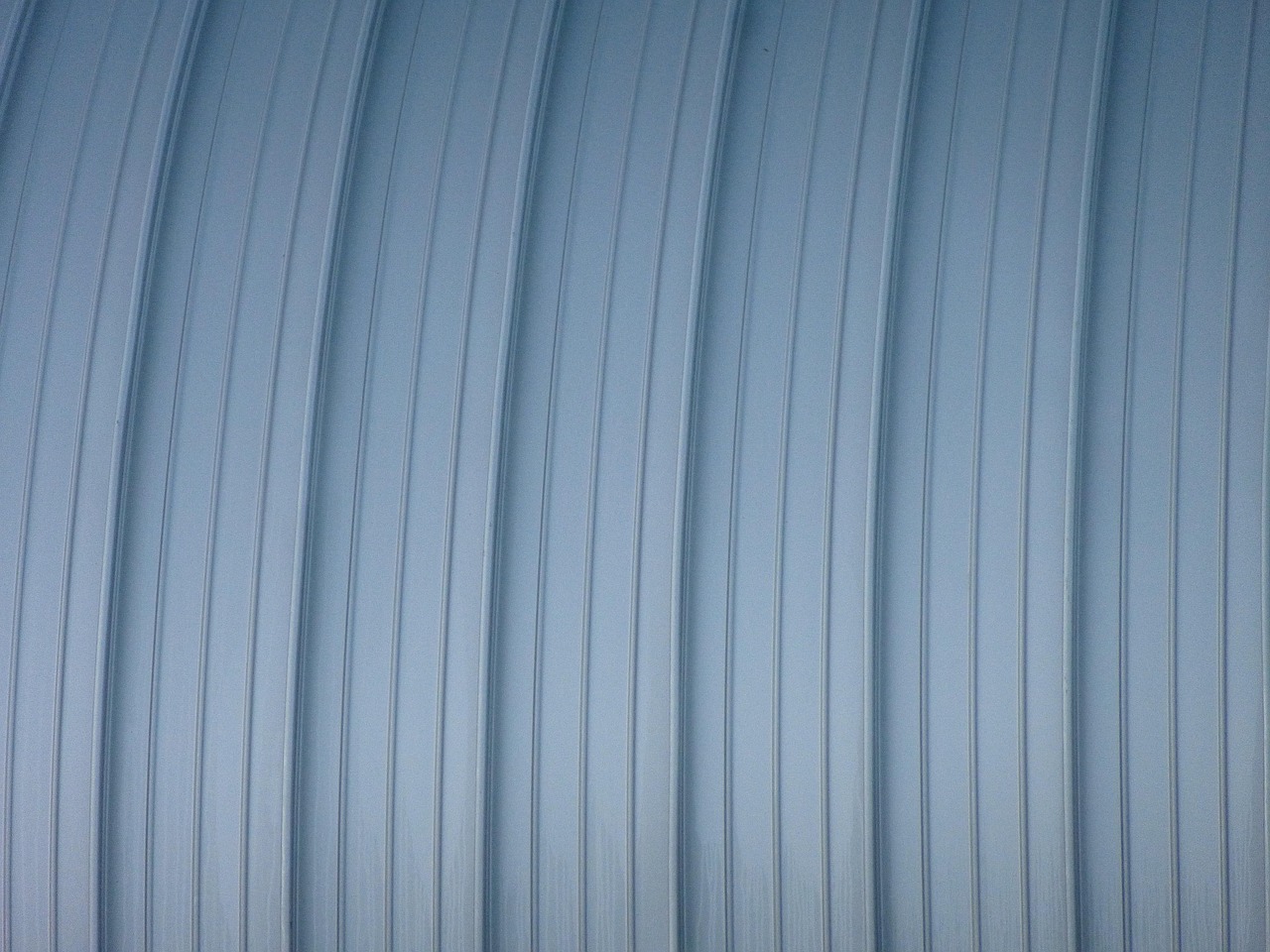
Grinding removes material with abrasives. It is used to correct welds, flatten surfaces, remove scale or create a controlled texture before painting or coating. Polishing uses progressively finer abrasives to reduce visible marks and improve reflectivity. Brushing creates a directional grain, commonly seen on stainless steel sheets, appliance panels and architectural trim.
These finishes are usually selected for appearance, cleanability and touch quality rather than heavy corrosion protection. On stainless steel, polishing can reduce places where dirt or contaminants collect, but alloy grade and exposure environment still matter. On aluminum or carbon steel, an attractive mechanical finish may still need anodizing, plating, conversion coating, oiling, painting or powder coating if the part will face humidity, salt, handling or outdoor service.
Blasting, tumbling and deburring
Abrasive blasting uses media to clean or roughen a surface. For protective coatings on steel, surface preparation standards published by AMPP and legacy SSPC/NACE documents define cleanliness levels, surface profile, soluble salt testing and related preparation issues. This matters because many coating failures start with poor cleaning, sharp edges, weld spatter, retained mill scale or contaminants that are not obvious during first inspection.
Tumbling, vibratory finishing and deburring are more common for small machined, stamped or cast parts. They remove burrs, break sharp edges and make the surface more uniform. The trade-off is that mass finishing can round features, alter small dimensions or leave media residue. It should be reviewed carefully when parts include threads, sealing edges, tight holes or precision mating surfaces.
Chemical and electrochemical finishes modify the surface layer
Chemical and electrochemical finishes do not simply cover a part like paint. They react with or convert the surface, which is useful when dimensional build-up must be limited or when the finish needs to remain closely integrated with the substrate. These processes are sensitive to alloy chemistry, cleaning quality, bath control and post-treatment, so the same finish name may not deliver the same result on every material.
Anodizing and passivation
Anodizing is strongly associated with aluminum. It is an electrochemical process that grows an aluminum oxide layer, creating a harder, more corrosion-resistant and often decorative surface compared with bare aluminum. The Aluminum Anodizers Council emphasizes coating thickness as an important attribute of anodized finishes, and architectural anodizing commonly distinguishes between classes by thickness. Color can be introduced into porous anodic coatings, but final appearance depends on alloy, surface preparation, coating thickness, dye or electrolytic coloring method and sealing.
Passivation is commonly specified for stainless steel. Instead of adding a visible coating, it removes free iron and supports the chromium-rich passive film that gives stainless steel its corrosion resistance. It is not a fix for choosing the wrong stainless grade, and it will not repair deep contamination, poor welding practice or design features that trap chloride solution.
Phosphate, chromate and black oxide
Phosphate coatings are often used on steel as paint pretreatments or as light-duty corrosion protection when combined with oil or other sealers. Zinc phosphate and manganese phosphate have different performance profiles. Manganese phosphate is often associated with wear-in and oil retention, while zinc phosphate is common as a coating base.
Chromate conversion coatings have been widely used on aluminum, zinc and other metals because they can provide corrosion resistance and paint adhesion. However, hexavalent chromium has important health and environmental restrictions. OSHA identifies hexavalent chromium exposure as a serious workplace hazard in electroplating and related operations, and the EPA has also addressed wastewater from metal finishing operations. For specifiers, the practical point is to avoid treating conversion coatings as interchangeable. Confirm the chemistry, regulatory requirements, customer specification and disposal responsibilities.
Black oxide creates a dark conversion finish on ferrous metals and is often used where appearance and minimal dimensional change matter. Its corrosion resistance is usually limited unless it is sealed with oil, wax or another post-treatment, so it should not be confused with a heavy-duty outdoor coating.
Metallic and engineered coatings add performance to the base metal
Metallic coatings are selected when the surface needs properties the base metal does not provide economically. A mild steel part may receive zinc for sacrificial corrosion protection, nickel for wear and corrosion resistance, chrome for hardness and appearance, or tin for solderability. Engineered coatings can also include thermal spray and vapor-deposited films for demanding wear, heat or friction requirements.
Electroplating and electroless plating
Electroplating deposits metal using electrical current. Common plated metals include zinc, nickel, chromium, copper, tin and precious metals. The process is used for conductivity, corrosion protection, solderability, appearance and wear resistance. The challenge is that coating thickness can vary with part geometry, current density and racking. Recesses, sharp corners and blind holes may plate differently unless the process is designed around them.
Electroless nickel is different because deposition is driven by a controlled chemical reduction process rather than an external current. The Nickel Institute describes electroless nickel as useful where uniform coating thickness, wear resistance, corrosion resistance and adhesion on complex components are important. Heat treatment can improve hardness and wear behavior, but it may also change corrosion performance. For this reason, the required class, phosphorus level, thickness and heat treatment should be specified rather than assumed.
Hot-dip galvanizing, thermal spray and PVD
Hot-dip galvanizing coats steel with zinc and is widely used for structural components, guardrails, fasteners and outdoor steelwork. It provides sacrificial protection, meaning zinc corrodes preferentially and helps protect exposed steel at small scratches or cut edges. Its appearance is not as smooth or decorative as many architectural coatings, and the high processing temperature and coating thickness must be considered for threaded parts, thin sections and assemblies.
Thermal spray processes deposit molten or semi-molten material onto a prepared surface. Zinc, aluminum, stainless, ceramic and carbide-based coatings can be used depending on service conditions. These coatings are useful for corrosion, wear, heat and dimensional restoration, but they require controlled surface preparation and inspection because adhesion is largely mechanical. See also: Buying Guides.
PVD, or physical vapor deposition, produces thin hard films such as titanium nitride or chromium nitride on tools, hardware, watches, medical instruments and decorative components. PVD can improve hardness, wear resistance and color stability, but it is not a substitute for correcting poor substrate finish. Thin films often reproduce underlying scratches, pits or waviness.
Organic coating systems protect by barrier and design
Organic coatings include liquid paint, powder coating and e-coat systems. They mainly protect by creating a barrier between metal and the environment, although primers may also include corrosion-inhibiting chemistry. ISO 12944 is one of the most widely referenced frameworks for protective paint systems on steel structures, and ISO 12944-2 classifies environments by corrosivity and exposure conditions. Its broader lesson applies beyond structural steel: environment is not a minor detail; it is one of the main design inputs for coating selection.
Powder coating, liquid paint and e-coat
Powder coating usually applies charged powder to a grounded metal part and cures it with heat into a continuous film. The Powder Coating Institute describes electrostatic spray deposition as a typical application method for powder coatings on metal substrates. Powder coating is widely used for brackets, frames, appliances, outdoor furniture, aluminum extrusions and hardware components because it can deliver color, film build and durable appearance without liquid solvent application in the same way as conventional wet paint.
Liquid paint remains important for large structures, field application, complex repair, specific primer-topcoat systems and special chemistries. E-coat, or electrodeposition coating, is widely used when uniform coverage over complex shapes and cavities is needed, especially as a primer layer in high-volume manufacturing.
No organic coating performs well if the substrate is dirty, oily, under-cured, over-baked, poorly pretreated or designed with water traps. Edges, welds, bolt holes and crevices are common weak points. A coating specification should therefore include surface preparation, pretreatment, coating system, dry film thickness, cure condition, inspection method and repair procedure.
How to choose the right metal surface finish
The most useful selection method is to start with service requirements, not finish names. “Zinc plated,” “anodized,” “polished” or “powder coated” is not enough unless the drawing or purchase specification also defines measurable performance.
Start with substrate and environment
Carbon steel, stainless steel, aluminum, copper alloys, zinc die castings and titanium respond differently to finishing. A finish that works on 6061 aluminum may not give the same color or corrosion result on a high-silicon casting. A finish suitable for indoor dry service may fail near salt spray, pool chemicals, fertilizer, marine exposure or industrial pollution. For structural steel coatings, ISO 12944 uses corrosivity categories because environmental stress strongly affects coating choice and expected durability.
Define the primary function
If appearance is the priority, compare color stability, gloss, texture and acceptable variation. If wear is the priority, evaluate hardness, coefficient of friction, thickness and lubrication. If corrosion resistance is the priority, consider whether the coating is sacrificial, barrier-type or a conversion layer. If electrical performance matters, check conductivity, contact resistance and masking. If the part has close tolerances, consider coating build-up, edge rounding and whether dimensions apply before or after finishing.
Specify measurable acceptance criteria
Good specifications convert expectations into inspection points. Depending on the finish, these may include roughness, gloss, color range, coating thickness, adhesion, hardness, porosity, salt-fog exposure, cyclic corrosion testing, seal quality, cure verification or visual acceptance samples. ASTM B117 salt spray is a common controlled salt-fog practice, but it should be used carefully: it compares specimens under defined test conditions and should not be treated as a simple prediction of real outdoor service life.
Practical specification checklist
- Identify the base metal and alloy, including heat treatment where relevant.
- State whether dimensions apply before or after finishing.
- Define the required surface texture, such as Ra, Rz, lay direction or visual grain sample.
- Specify cleaning and pretreatment, especially for paint, powder coating and plating.
- Set coating type, thickness range, color, gloss, class, grade or standard where applicable.
- List performance tests only when they match the actual risk, not as decorative requirements.
- Consider masking, racking marks, contact points and areas where coating is not allowed.
- Define acceptable cosmetic variation with samples or written criteria.
- Confirm environmental, wastewater and worker-safety obligations for chromium, nickel, acids, solvents and PFAS-related processes.
- Include packaging and handling requirements because many finishes are damaged after production, not during finishing.
Frequently asked questions
What is the most common surface finish for metal?
There is no single most common finish across all metals. Brushing and polishing are common for visible stainless steel, anodizing is common for aluminum, zinc plating is common for fasteners, and powder coating or paint is common for steel and aluminum products that need color and barrier protection.
Which metal finish is best for corrosion resistance?
The answer depends on substrate and environment. Stainless steel passivation, aluminum anodizing, zinc galvanizing, electroless nickel, powder coating and multi-coat protective paint systems can all resist corrosion in the right setting. For severe outdoor, marine or industrial exposure, selection should be based on a recognized environmental category, coating system data and inspection plan.
Is powder coating better than anodizing?
Powder coating and anodizing solve different problems. Powder coating adds an organic film with broad color and gloss options. Anodizing converts the aluminum surface into an oxide layer and can preserve a metallic look. Powder coating is not automatically better; anodizing is not automatically more durable. The better option depends on aluminum alloy, appearance target, UV exposure, abrasion, thickness tolerance and repair expectations.
Can a mechanical finish protect metal from rust?
A mechanical finish alone usually does not provide reliable rust protection for carbon steel. Polishing or brushing may improve appearance and cleanability, but steel still needs oil, conversion coating, plating, galvanizing, paint, powder coating or another protective system when corrosion is a concern.
Why does surface preparation matter so much?
Surface preparation removes contamination, creates the required profile and reduces weak points that cause coating failure. Standards from AMPP and related SSPC/NACE documents exist because adhesion, coating thickness and long-term corrosion resistance depend heavily on what happens before the visible finish is applied.