Universal fasteners explained for industrial hardware buyers
What universal fasteners really means
Universal fasteners are not a single patented part or a component that works in every assembly. In industrial buying, the phrase usually refers to widely used fastening hardware such as bolts, screws, nuts, washers, studs, anchors, clips, and rivets. These parts can support many applications when the size, material, thread, grade, and finish are specified correctly. In this context, “universal” does not mean unlimited. It means versatile, standardized, and easy to source for common maintenance, construction, machinery, furniture, HVAC, electrical enclosure, and general fabrication work.
For buyers and engineers, the main value is inventory control. A well-planned fastener list can reduce duplicate parts, prevent mismatched thread systems, and make maintenance work faster. The same approach becomes risky when it ignores load, corrosion, vibration, temperature, or industry standards. Universal fasteners should be treated as a standardized starting point, not as a substitute for engineering review.
This article explains how to classify universal fasteners, which standards and specifications matter, and when general-purpose hardware should be replaced by application-specific fastening solutions. For related hardware topics, see the Fasteners category.
Why buyers use universal fasteners in industrial sourcing
Universal fasteners are widely used because most facilities depend on thousands of small metal parts to hold larger systems together. A production line may need socket head cap screws for machine guarding, hex bolts for brackets, self-tapping screws for sheet metal, washers for load distribution, locknuts for vibration resistance, and anchors for mounting equipment. Without a structured selection system, the storeroom can quickly fill with near-duplicate items that differ only slightly in length, finish, head style, or thread pitch.
The main benefit is standardization. When a company selects preferred fastener sizes, thread systems, material grades, and coatings, purchasing becomes easier and maintenance teams spend less time searching for replacements. A common M6, M8, 1/4-20, or 3/8-16 fastener program, for example, can support many routine assemblies when the mechanical and environmental requirements are similar.
Interchangeability is another reason buyers use these parts. Dimensional standards from organizations such as ASME, ISO, DIN, SAE, and ASTM help define threads, head dimensions, mechanical properties, and performance requirements. These standards do not make every fastener interchangeable in every application, but they do give buyers a common language for specifying parts from different suppliers.
The limitation is just as important. A universal fastener that works in a light-duty bracket may be unsuitable for a pressure boundary, structural steel joint, vehicle suspension, crane component, or chemical plant installation. The more safety-critical the joint, the less acceptable it is to rely on a generic description. In those cases, the specification must identify the exact standard, grade, finish, testing requirement, and installation method.
Common types of universal fasteners
The term universal fasteners usually covers the most common families of mechanical fastening hardware. Each family solves a different joint problem, so buyers should classify parts by function before choosing size or finish.
| Fastener type | Typical function | Common selection factors |
|---|---|---|
| Bolts | Clamp parts together, usually with a nut or tapped hole | Diameter, length, thread, grade, head style, finish, load |
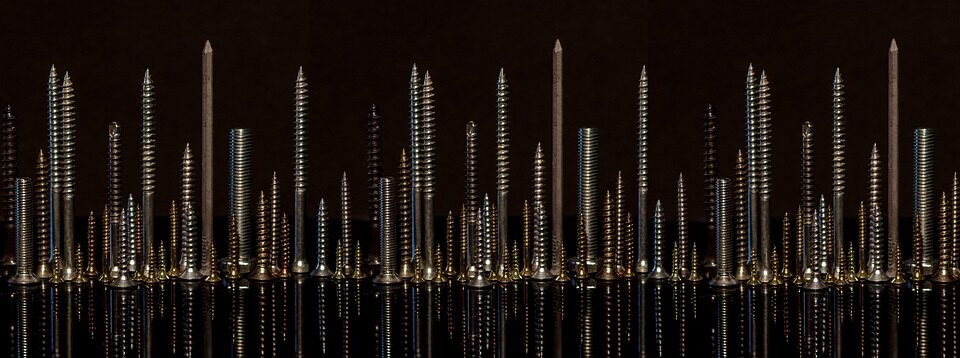
| Screws | Fasten into a tapped hole or directly into material | Drive type, thread form, point style, substrate, torque |
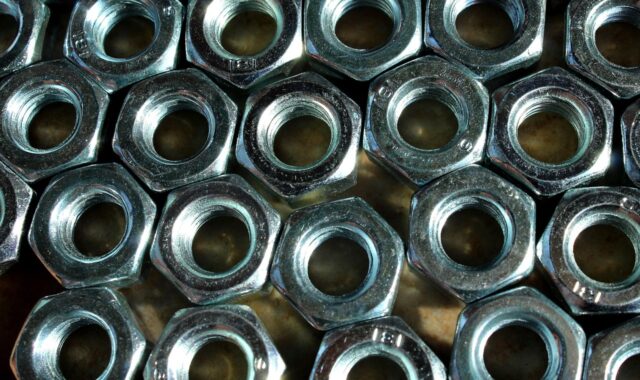
| Nuts | Provide internal threads for mating bolts or studs | Thread match, strength class, height, locking feature, coating |
| Washers | Distribute load, protect surfaces, or support locking systems | Hardness, outside diameter, thickness, finish, bearing surface |
| Studs and threaded rod | Create double-ended or continuous threaded connections | Thread length, material, strength, temperature, installation method |
| Anchors | Fix components to concrete, masonry, or hollow substrates | Base material, edge distance, embedment, load direction, corrosion exposure |
| Rivets and pins | Join, locate, or retain parts without conventional threads | Shear load, hole tolerance, removability, material compatibility |
Bolts and screws are often confused because both may have external threads. A practical distinction is that a bolt is commonly designed to be used with a nut or threaded component to create clamp force, while a screw is commonly driven into a tapped hole or directly into material. The distinction is not perfect in every standard or market, but it helps buyers discuss function clearly.
Washers may look like minor accessories, but they can affect joint behavior. Flat washers can spread bearing load or protect a surface. Hardened washers are used where a soft washer would deform. Lock washers, prevailing torque nuts, and thread-locking methods should be selected only after considering vibration, serviceability, and the overall joint design.
Specifications that matter more than the word universal
A fastener description such as “universal screw” or “general-purpose bolt” is not enough for industrial purchasing. A complete specification should identify the details that control fit, strength, corrosion resistance, and installation. The most important details are thread system, diameter, length, material, strength class, finish, head style, drive style, and the applicable standard.
Thread system and size
Thread compatibility is the first checkpoint. Metric threads and inch threads are not interchangeable. Even within one system, coarse and fine threads can differ in pitch, engagement, and performance. Buyers should not assume that two fasteners with the same nominal diameter will fit the same nut or tapped hole. For example, M10 coarse and M10 fine threads require different mating threads, and a 3/8-16 fastener does not match a 3/8-24 nut.
Material and strength
Fasteners are made from carbon steel, alloy steel, stainless steel, brass, aluminum, nylon, and other materials. Carbon and alloy steels are common where strength is the main requirement. Stainless steel is often selected for corrosion resistance, but it is not automatically stronger than alloy steel. Brass and aluminum may be chosen for electrical, weight, or appearance reasons, while plastic fasteners are useful where insulation, low weight, or corrosion resistance matters more than high clamp load.
Strength markings should be understood before any substitution is made. Metric property classes such as 8.8, 10.9, and 12.9 are not the same as inch grades such as SAE Grade 5 or Grade 8. ISO 898-1 is widely used for the mechanical properties of metric carbon steel and alloy steel bolts, screws, and studs within its scope. ASTM F3125 covers certain high-strength structural bolts with 120 ksi and 150 ksi minimum tensile strength levels. These examples show why fasteners should be purchased by specification rather than by appearance.
Finish and corrosion environment
Plating and coating choices affect service life and fit. Zinc plating is common for indoor or mildly corrosive environments. Hot-dip galvanizing may be used outdoors, but it adds coating thickness and may require compatible nuts. Stainless steel can perform well in many corrosive environments, but chloride exposure, galvanic contact, and grade selection still matter. Painted, black oxide, phosphate, and mechanically deposited coatings each have different purposes and limitations.
When fasteners connect dissimilar metals, galvanic corrosion can occur if moisture creates an electrolyte path. A stainless screw in aluminum, for example, may need isolation, sealing, or a compatible coating depending on the environment. Universal fasteners are most reliable when the finish is selected for the actual exposure rather than copied from a previous job.
How to choose universal fasteners without overspecifying
Overspecification is common in fastener sourcing. It happens when buyers choose the strongest, most expensive, or most corrosion-resistant option for every joint. That may seem safe, but it can create new problems such as galling, brittle behavior, coating incompatibility, installation difficulty, or unnecessary cost. A better method is to match the fastener to the joint requirement.
Start with the load. Determine whether the fastener mainly sees tension, shear, clamp load, vibration, or alignment duty. A light cover panel does not require the same fastener as a machine base or steel connection. If the joint is safety-critical, engineering calculations and relevant standards should control the specification.
Next, review the substrate. Sheet metal, cast iron, aluminum extrusion, timber, concrete, and plastic all require different thread engagement and installation approaches. A self-drilling screw can be efficient in sheet metal, but it is not a substitute for a machine screw in a tapped precision part. A concrete anchor must be chosen for the base material, embedment depth, edge distance, and load direction. See also: Buying Guides.
Then evaluate assembly access. A hex head bolt may be easy to install with a wrench, while a socket head cap screw may be better where side clearance is limited. Phillips, slotted, hex socket, Torx-style, and square drives differ in torque transfer, cam-out risk, tooling availability, and tamper resistance. A fastener that is technically adequate but difficult to install can still cause field problems.
Finally, consider service and replacement. If a maintenance team must remove and reinstall the fastener repeatedly, avoid solutions that damage threads, strip easily, or require special tools without a strong reason. In a universal fastener program, serviceability is part of the specification.
Standards and quality controls buyers should recognize
Fastener standards exist because small dimensional or mechanical differences can change joint performance. ASME B18 standards cover many inch-series fastener dimensions and related identification systems. ISO standards cover metric threads, mechanical properties, and product dimensions across many fastener categories. ASTM specifications are common in construction, industrial, and material-focused applications. SAE standards are often relevant in automotive and inch-series mechanical hardware.
In the United States, the Fastener Quality Act is an important reference point for certain metallic bolts, nuts, screws, studs, and direct tension-indicating washers that are represented as meeting covered consensus standards. NIST’s public FAQ explains that the law is intended to protect public safety by requiring covered fasteners to conform to the specifications to which they are represented and by addressing testing, inspection, and laboratory accreditation requirements. Not every fastener in a maintenance drawer falls under that law, but the principle is useful: a fastener should match the specification claimed for it.
Quality control also depends on traceability. For routine general-purpose fasteners, a supplier’s catalog data may be enough. For structural, pressure, lifting, transportation, or regulated applications, buyers may need certificates of conformity, material test reports, lot traceability, coating documentation, or proof-load information. These documents should be requested before purchase, not after a problem appears.
Counterfeit or misrepresented fasteners are a real risk in critical uses because appearance alone cannot confirm strength, heat treatment, or material chemistry. Head markings, packaging labels, inspection records, and supplier reputation all matter. A low-cost substitute may be acceptable for a noncritical panel, but not for a joint where failure can injure people or damage equipment.
Where universal fasteners should not be treated as universal
The universal fastener concept works best for low- to medium-risk assemblies where standard hardware is appropriate. It should not be stretched into applications that require engineered fastening systems, certified materials, or controlled installation procedures.
- Structural steel connections: High-strength bolted joints often require specific bolt, nut, washer, and installation requirements. Substituting a visually similar bolt can create a serious risk.
- Pressure equipment and piping: Bolting may need defined material grades, temperature ratings, coatings, lubrication, and tightening procedures.
- Automotive, rail, aerospace, and lifting equipment: Fasteners may be subject to vibration, fatigue, safety regulations, and strict traceability requirements.
- Corrosive or marine environments: Stainless grade, coating system, galvanic compatibility, and crevice conditions must be considered together.
- High-temperature service: Strength, relaxation, oxidation, and material compatibility can change significantly at elevated temperatures.
In these cases, “universal” should be replaced by a precise specification. The correct question is not only “Will this fastener fit?” but also “Will this fastener maintain the required joint performance throughout service?”
A practical selection checklist
A simple checklist can prevent many sourcing errors. Before buying universal fasteners for production or maintenance, confirm the following items:
- Identify the joint function, including tension, shear, vibration, alignment, or sealing requirements.
- Confirm the thread system, diameter, pitch, and length.
- Select the correct material and strength class for the load and environment.
- Choose the head style and drive style based on access, tooling, torque, and appearance needs.
- Match nuts and washers to the bolt or screw grade, coating, and thread system.
- Check whether the application requires a specific ASME, ISO, ASTM, SAE, DIN, or project specification.
- Verify coating compatibility, especially for outdoor, marine, chemical, or dissimilar-metal assemblies.
- Decide whether documentation, lot traceability, or certificates are required.
- Avoid substituting a higher-grade or different-material fastener without checking joint behavior.
- Record approved fasteners in a preferred parts list to support future maintenance.
This checklist also helps purchasing teams communicate with engineers and suppliers. Instead of asking for a “universal bolt,” the buyer can request a defined fastener that still serves many routine needs.
Frequently asked questions
Are universal fasteners the same as standard fasteners?
They are closely related, but not identical. Standard fasteners are made to recognized dimensional, material, or performance standards. Universal fasteners is a broader market phrase for versatile parts used across many applications. A universal fastener should still be specified by a recognized standard when performance matters.
Can one fastener grade replace another?
Not automatically. A stronger fastener may change clamp load, torque requirements, thread stripping behavior, or fatigue performance. Replacing one grade with another should be reviewed against the joint design, mating material, nut grade, washer hardness, and installation method.
Which is better, stainless steel or zinc-plated steel?
Neither is always better. Stainless steel is often selected for corrosion resistance, while zinc-plated carbon steel is common for economical indoor or mild-service use. Strength, corrosion exposure, galvanic compatibility, cost, and availability should all be compared before choosing.
Do washers always need to be used with bolts?
No. Washers are useful when they distribute load, protect a surface, bridge an oversized hole, or meet a specified installation requirement. Some flanged fasteners or designed joints may not require separate washers. The joint specification should decide.
What is the safest way to buy universal fasteners?
Use the term universal only as a planning category. The purchase description should still include size, thread, length, material, grade or property class, finish, head style, drive style, quantity, and any required standard or documentation.
Bottom line
Universal fasteners are useful because they simplify everyday hardware sourcing, but they are reliable only when buyers define the real requirements behind the word. The best approach is to standardize common sizes and families for routine work while keeping application-specific specifications for critical joints. A good universal fastener program reduces clutter, improves availability, and supports maintenance efficiency without suggesting that one fastener can safely solve every fastening problem.