Electrical wiring tools for accurate installation and repair
Start with the work, not the toolbox
Electrical wiring tools should be selected around the task, the circuit environment and the worker using them. A useful wiring kit is more than a mix of cutters, pliers and screwdrivers. It should help a qualified person isolate power, verify absence of voltage, cut and strip conductors cleanly, make reliable terminations, route cable or conduit, label circuits and inspect the finished work. Safety guidance from OSHA and NIOSH consistently emphasizes de-energizing circuits, applying lockout or tagout practices where required, and using equipment that is grounded, double insulated or otherwise suitable for the electrical hazard. In practice, the question is not only whether a tool can do the job, but whether it is properly rated, maintained and appropriate for the location.
This article is a selection guide for buyers, apprentices, maintenance teams and hardware distributors comparing wiring tools for everyday installation and repair. It is not a substitute for the National Electrical Code, local permit rules, employer safety procedures or training from a licensed electrical professional.
Core electrical wiring tools and what each one controls
The clearest way to build a wiring tool set is to group tools by the problem they solve. Cutting tools control conductor length and cable preparation. Stripping tools control insulation removal. Crimping tools control connector compression. Test instruments control verification. Pulling and routing accessories control cable placement. Insulated hand tools help reduce contact risk when qualified people must work near energized parts under approved procedures.
| Tool group | Common tools | Main purpose | Selection point |
|---|---|---|---|
| Verification and testing | Non-contact voltage tester, two-pole tester, multimeter, clamp meter, receptacle tester | Check voltage, continuity, current or wiring condition | Match the meter category and voltage rating to the location being measured |
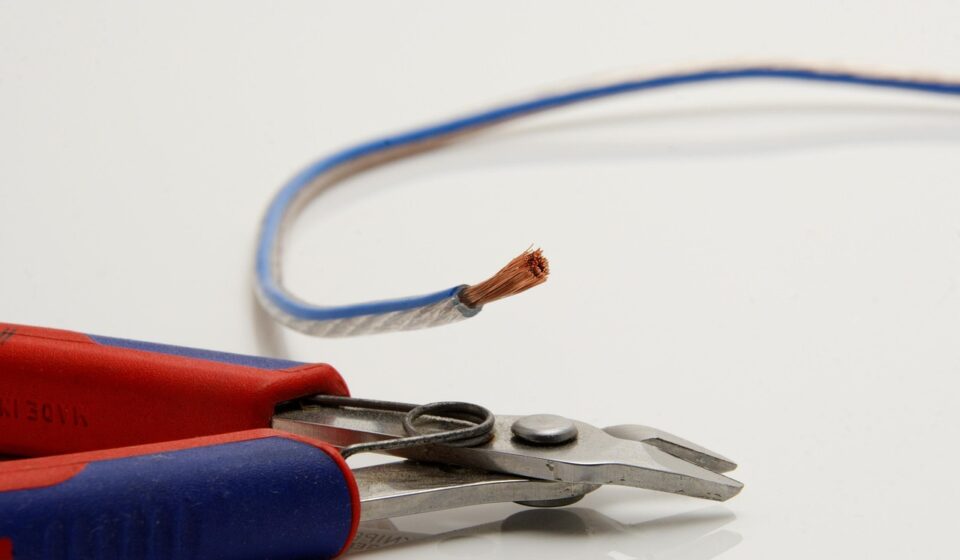
| Cutting and cable preparation | Cable cutter, diagonal cutter, utility knife, electrician scissors | Cut cable, trim conductors and prepare jackets | Choose jaws sized for the cable type to avoid crushing or ragged cuts |
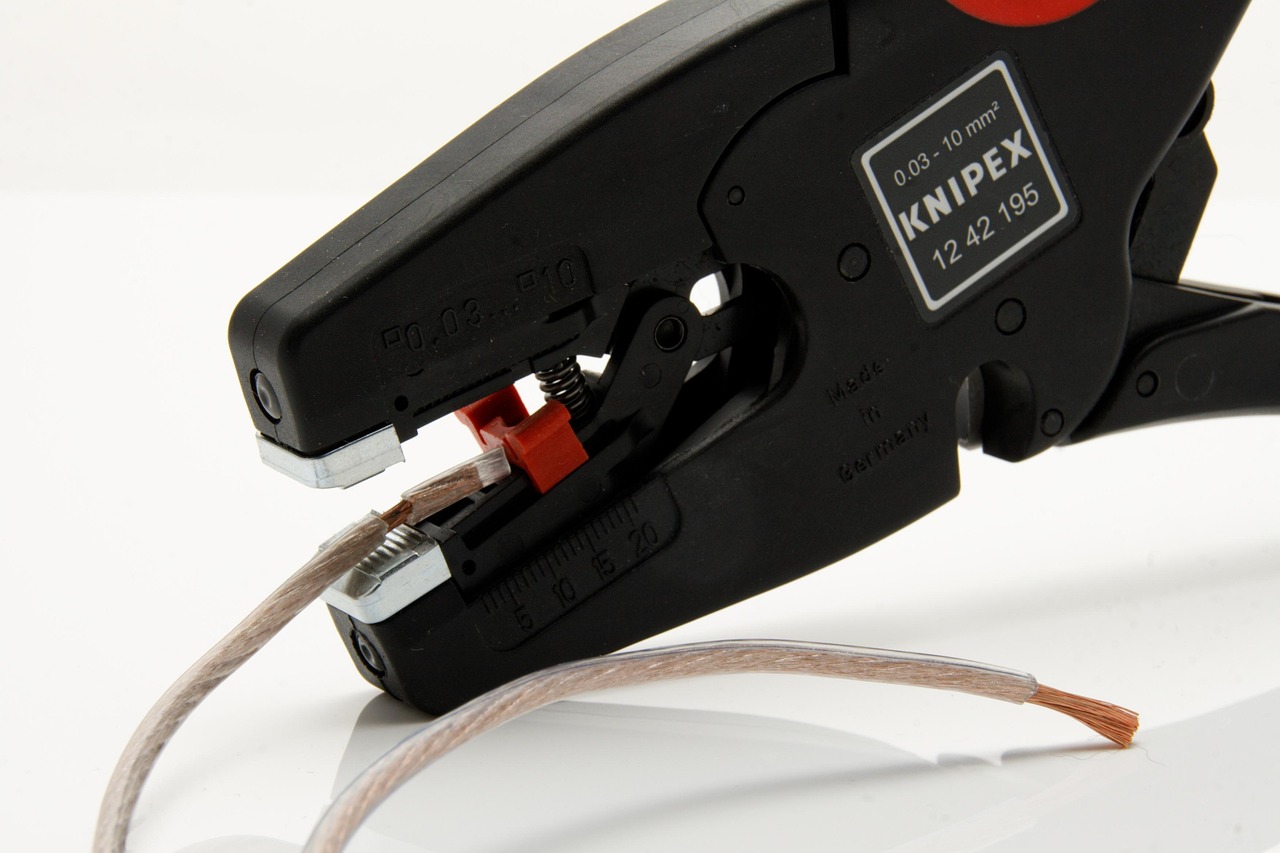
| Stripping | Manual wire stripper, automatic stripper, cable ripper | Remove insulation without damaging the conductor | Use gauge markings that match the conductor size and material |
| Termination | Crimper, torque screwdriver, nut driver, terminal driver | Make mechanical and electrical connections | Match the crimp die, terminal type and torque requirement |
| Holding and forming | Lineman pliers, needle-nose pliers, groove-joint pliers | Bend, pull, twist and position conductors | Use insulated versions only when the marking and condition support the work |
| Routing and installation | Fish tape, cable rods, conduit bender, reamer, hole saw | Move wiring through walls, raceways and boxes | Match tool size to conduit, box fill limits and cable bend radius needs |
| Identification and finishing | Label maker, marker, tape measure, level, flashlight | Document circuits and improve repeatability | Use durable labels suited to the environment |
This structure also helps control purchasing. A homeowner replacing a low-voltage doorbell transformer needs a different kit from a commercial electrician landing conductors in a distribution panel. A maintenance technician troubleshooting equipment needs test instruments and lockout accessories before specialty pulling tools. A distributor serving the Tools and Accessories market can use these categories to build clearer assortments instead of offering one generic electrical kit to every buyer.
Ratings and standards matter more than handle color
Insulated handles are easy to recognize, but color alone does not prove suitability. For hand tools used on or near energized electrical apparatus, two common references are ASTM F1505 and IEC 60900. ASTM F1505-16(2021) covers testing and performance requirements for insulated and insulating hand tools used on or near energized conductors up to 1,000 volts AC or 1,500 volts DC. IEC 60900:2018 applies to insulated, insulating and hybrid hand tools for live working or close-to-live work up to the same nominal voltage levels. These standards address tool construction and testing. They do not give permission to work energized without the required procedures, PPE and qualifications.
Insulated hand tools
Insulated screwdrivers, pliers, cutters and nut drivers are most relevant where a qualified worker may be within a restricted approach boundary or where accidental contact with energized parts is a credible hazard. NFPA 70E workplace electrical safety language treats insulated tools as part of a broader risk control system, not as a stand-alone shield. Tools must be inspected for damaged insulation, worn or damaged tips, contamination and any other condition that could reduce their intended performance. A cracked handle, chipped insulation layer or modified shaft should remove the tool from electrical use.
Test instruments
Voltage testers and multimeters need a different type of rating review. The IEC 61010 family of standards covers safety requirements for electrical measurement equipment. In practical terms, the measurement category is as important as the voltage number. CAT II, CAT III and CAT IV ratings reflect different exposure levels to transient energy. A meter used at a distribution panel or service entrance may need a higher category rating than a meter used on a small electronic circuit, even if the nominal voltage looks similar. Users should also inspect test leads, probe tips, fuses and case condition before relying on a reading.
Code and local adoption
As of October 16, 2026, NFPA lists the 2026 edition of NFPA 70, the National Electrical Code, as the current edition. However, code adoption happens through states, municipalities and authorities having jurisdiction, so the legally enforced edition can vary by location. This distinction matters when selecting tools for torque, labeling, GFCI protection, conduit work and inspection documentation. A tool can be well made and still be used incorrectly if the installer ignores the local code path for the project.
Match the tool set to the wiring task
A small wiring repair and a new branch-circuit installation may use some of the same tools, but the priorities are different. For device replacement, the core kit may include verification tools, insulated screwdrivers, wire strippers, needle-nose pliers and torque-aware fastening tools. For cable installation, fish tape, cable cutters, stapling or support tools, hole saws and labeling supplies become more important. For conduit work, a bender, reamer, threader or knockout set can determine whether the installation is clean, inspectable and repeatable.
Residential device and fixture work
Typical residential work often involves receptacles, switches, lighting boxes and small appliance circuits. The tool set should support accurate stripping, clean bending of conductor loops, secure terminal screws and verification before and after work. Receptacle testers can identify some common wiring problems, but they do not replace a proper voltage test or professional diagnosis. Where permits or licensed work are required, the tool list does not change the legal requirement.
Commercial and maintenance work
Commercial environments add panelboards, raceways, equipment disconnects, multiwire circuits and stricter documentation expectations. Torque screwdrivers, calibrated crimpers, lockout devices, higher-category meters and durable labeling tools become more important in these settings. A maintenance team should standardize which meters, leads and insulated tools are acceptable for different work zones, because inconsistent tools lead to inconsistent risk control.
Low-voltage and data work
Low-voltage wiring for controls, alarms, communications or data networks uses smaller conductors and different termination methods. Precision strippers, punch-down tools, modular crimpers, continuity testers and tone generators may matter more than heavy pliers. The same general rule still applies: match the tool to the cable type and connector system rather than forcing a general-purpose cutter or crimper into every job.
Inspection and maintenance protect tool performance
Electrical tools are consumables in the safety sense. They may last for years, but their suitability can change after one drop, one overcurrent event or one poor storage decision. Before use, inspect insulated hand tools for cuts, swelling, burn marks, exposed metal where insulation should cover the shank, damaged tips and oil or chemical contamination. Inspect cutters for jaw gaps and dull edges, because crushed or torn conductors can create poor terminations. Inspect strippers for worn gauge holes that may nick copper or aluminum.
Test instruments need the same attention. A meter with damaged leads, incorrect fuses or a cracked case should not be trusted for electrical verification. A common safe-work practice is to verify the tester on a known live source, test the circuit, then verify the tester again. This reduces the risk of trusting a failed instrument. For jobsite power tools, OSHA and NIOSH guidance highlights the importance of grounding, double insulation, GFCI use where required and disconnecting tools before inspection or repair. See also: Buying Guides.
Storage also matters. Keep insulated tools away from sharp loose hardware, solvents, excessive heat and heavy impact. Keep test leads coiled without sharp bends. Store crimp dies and specialty bits where they cannot be mixed with incompatible connector systems. A clean toolbox is not just about appearance; it reduces the chance that a damaged or incorrect accessory is used in electrical work.
Buying priorities for a practical wiring kit
When comparing electrical wiring tools, price is only one part of value. A cheaper tool that damages conductors, slips on terminal screws or lacks a clear rating can cost more through rework and safety exposure. Buyers should look for clear markings, manufacturer documentation, replaceable wear parts, comfortable grip geometry and compatibility with the materials used most often.
- Choose by conductor range. Strippers, cutters and crimpers should state the wire sizes and materials they are designed to handle.
- Check rating marks. Insulated hand tools should carry relevant voltage and standard markings, not just colored grips.
- Match meters to the environment. Do not use a low-category meter in a higher-energy location simply because it displays the expected voltage range.
- Prioritize repeatable terminations. Ratcheting crimpers and torque tools can reduce variation when used with the correct connectors and settings.
- Plan for identification. Labels, markers and documentation tools reduce troubleshooting time later.
- Avoid mixed unknown tools. Unmarked secondhand electrical tools may be fine for general mechanical tasks, but they should not be assumed suitable for energized electrical environments.
For hardware retailers and procurement teams, a useful assortment should separate homeowner low-risk accessories, professional hand tools, insulated tools, meters, conduit tools and lockout-related accessories. This makes it easier for buyers to see why two similar-looking tools may belong in different applications.
Common mistakes to avoid
The first mistake is treating a voltage tester as a complete diagnosis. A tester can confirm a condition, but it does not explain every wiring defect or system risk. The second mistake is using ordinary pliers or screwdrivers near energized components because the handles appear thick. Without the correct rating, inspection and work procedure, that assumption is unsafe. The third mistake is using one stripper opening for several wire sizes. A small nick in a conductor can weaken the termination and create a future failure point. The fourth mistake is ignoring torque. Many modern devices and lugs depend on specified torque to maintain a reliable connection without damaging the conductor.
The fifth mistake is buying a kit that looks complete but lacks the tools that actually control quality: a suitable meter, fresh leads, a correct stripper, a connector-matched crimper, marking supplies and a way to keep the work de-energized. A well-chosen compact kit is often more useful than a large tool bag full of overlapping general-purpose tools.
Frequently asked questions
What are the essential electrical wiring tools for a basic kit?
A basic wiring kit usually includes a suitable voltage tester, wire strippers, cable cutters, insulated screwdrivers, pliers, a tape measure, labeling supplies and a flashlight. The exact kit depends on whether the work is residential, commercial, low-voltage or conduit-based.
Are insulated tools required for all electrical work?
Not for every task, but they are important when qualified workers may be near energized parts or when workplace procedures require them. Insulated tools should be properly rated, marked, inspected and used with the required safety practices.
Is a non-contact voltage tester enough to prove a circuit is off?
No. Non-contact testers are useful screening tools, but electrical verification should use an appropriate tester or meter and a safe procedure. Many workplaces require verifying the tester before and after checking the circuit.
What does CAT III or CAT IV mean on a multimeter?
These measurement categories relate to the electrical environment and transient energy exposure. CAT III is commonly associated with fixed installations and distribution circuits, while CAT IV applies closer to the primary supply or service entrance. The meter must match both the voltage and the category of the measurement location.
How often should electrical tools be replaced?
There is no single interval for every tool. Replace or remove tools from electrical service when insulation is damaged, jaws are worn, blades nick conductors, test leads are cracked, meter cases are damaged or calibration and performance can no longer be trusted.