How to choose metal hose fittings for safer industrial hose assemblies
Why metal hose fittings decide more than attachment
Metal hose fittings are not just hardware added to the end of a hose. In a finished assembly, the fitting helps determine how the line seals, how it responds to vibration, whether it can be inspected or reconnected, and whether the assembly can meet its pressure, temperature, and media requirements safely.
A sound selection process starts with the application, not only the thread size. For industrial buyers, maintenance teams, and specifiers, the practical question is: which fitting material, end connection, and assembly method will keep the hose compatible with the fluid, equipment port, and working conditions?
The answer depends on hose type, conveyed media, pressure cycles, temperature, movement, external environment, and applicable standards. This guide focuses on industrial metal hose fittings, including fittings used with corrugated metal hose assemblies and metal end connections used on other hose types. For related hardware topics, see the Metal Fittings section.
Start with the application before choosing a fitting
A fitting can look correct and still be wrong if the application details are incomplete. NAHAD Hose Safety Institute materials commonly promote the STAMPED method for hose selection: size, temperature, application, material conveyed, pressure, ends, and delivery. The value of this framework is that it keeps buyers from treating a hose fitting as a stand-alone threaded part.
- Size: confirm hose inside diameter, overall assembly length, fitting envelope, and any clearance restrictions around the port.
- Temperature: record both media temperature and ambient temperature. A fitting body may tolerate heat that an elastomer seal, gasket, or hose liner cannot.
- Application: identify whether the assembly will see vibration, flexing, static installation, vacuum, pulsation, washdown, abrasion, or outdoor exposure.
- Material conveyed: check chemical compatibility with the fitting metal, gasket material, liner, and any plating.
- Pressure: compare working pressure, vacuum, surge pressure, and test pressure as system conditions, not as catalog numbers in isolation.
- Ends: match the equipment port, sealing style, thread form, and required orientation.
- Delivery: consider lead time, traceability, required documentation, and whether the assembly must be tested or tagged before use.
This approach also brings trade-offs into view. A stainless fitting may improve corrosion resistance, but it can create galvanic concerns when connected to a dissimilar metal in a wet environment. A swivel end may make installation easier, but the seal design and torque procedure still have to match the equipment port.
Match fitting material to fluid and environment
Material selection should cover the fitting body, ferrule or collar, weld or braze area, gasket, and any surface treatment. In many applications, the fitting does not fail because the metal is weak. It fails because the material is exposed to the wrong fluid, temperature, chloride environment, cleaning chemical, or dissimilar-metal pairing.
Stainless steel
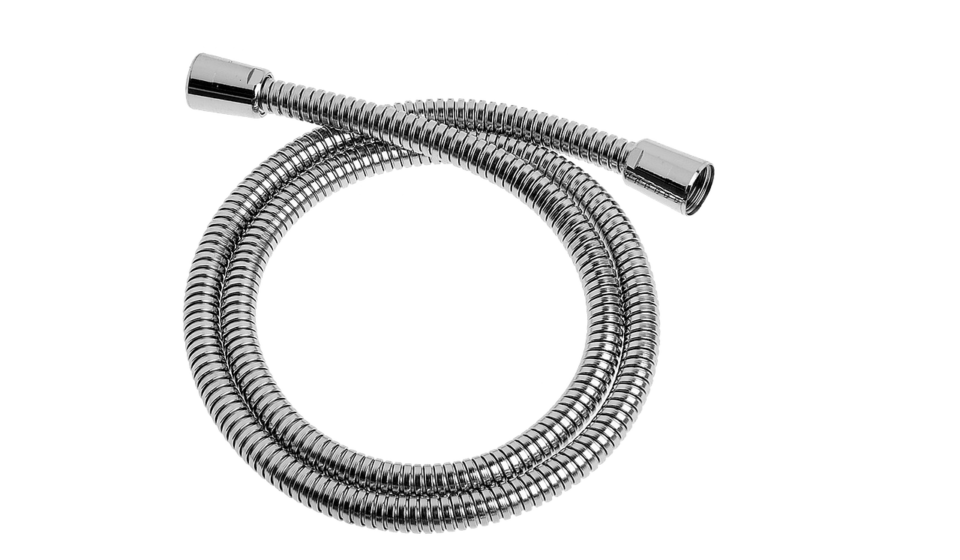
Stainless steel fittings are widely used where corrosion resistance, cleanability, or elevated temperature performance matters. Austenitic stainless grades such as 304 and 316 are common in industrial fluid handling. 316 stainless is often selected when chloride exposure or more aggressive service conditions are expected, although it is not immune to corrosion. Crevice corrosion, chloride stress corrosion cracking, and contamination from carbon steel tools can still create problems.
Carbon steel and plated steel
Carbon steel fittings are common in hydraulic and general industrial service because they can provide strength and broad availability. Zinc plating or other protective coatings may improve resistance to ordinary atmospheric corrosion, but plating should not be treated as chemical compatibility. Once the coating is damaged, the base metal can corrode. In wet, marine, or chemical environments, carbon steel often requires closer inspection and a clear replacement policy.
Brass and bronze
Brass and bronze fittings are often used with water, air, and lower-pressure utility lines, depending on the alloy and local code requirements. They can be easy to machine and install, but they are not universal substitutes for stainless or steel. Ammonia, some chemicals, dezincification risk, and potable-water requirements may limit use. Where drinking water is involved, standards such as NSF/ANSI/CAN 61 may be relevant to material health effects, not only mechanical fit.
Gaskets, O-rings and seals
Many leaks blamed on metal fittings are actually seal selection problems. ORFS connections, sanitary clamps, cam-and-groove couplings, and some flange systems rely on elastomeric or gasket seals. The seal must be compatible with the media, cleaning fluids, pressure, temperature, and compression set. For food-contact or drinking-water applications, the gasket and hose liner may raise different compliance questions from the metal fitting body.
Compare end connection styles by sealing method
Thread size alone does not define a hose fitting. The sealing method is just as important. A tapered pipe thread, a 37-degree flare, and an O-ring face seal can all be metal hose fitting options, but they seal in different ways and are not interchangeable.
| Connection style | Typical sealing principle | Common use | Selection caution |
|---|---|---|---|
| NPT or NPTF pipe thread | Tapered thread interference, often with sealant depending on type and service | General industrial piping and adapters | Do not assume compatibility with BSP threads; avoid over-tightening and repeated make-up that damages threads. |
| BSPP or BSPT | Parallel or tapered British pipe thread, often with a washer, cone seat, or bonded seal depending on design | Imported equipment, process lines, and mobile machinery | BSPP and BSPT are different; thread pitch and sealing face should be verified. |
| JIC 37-degree flare | Metal-to-metal 37-degree flare seat | Hydraulic and fluid power assemblies | Do not confuse with 45-degree flare or other cone-seat fittings. |
| ORFS | O-ring compressed against a flat face | Hydraulic systems where leak control is critical | O-ring material and groove condition are essential; damaged seals should be replaced. |
| Flange connection | Bolted flange with gasket or O-ring, depending on standard | Larger sizes, pumps, process equipment, and higher-flow lines | Bolt pattern, pressure class, gasket, and alignment must match. |
| Cam-and-groove coupling | Cam arms compress a gasket between mating couplings | Transfer hoses and temporary connections | Not suitable for every pressure, chemical, or hazardous service; gasket compatibility is central. |
| Sanitary clamp | Clamp compresses gasket between ferrules | Food, beverage, pharmaceutical, and clean process lines | Surface finish, gasket material, and cleaning procedure matter as much as metal grade. |
ASME B1.20.1 is a key reference for general-purpose inch pipe threads including NPT. SAE J514 covers 37-degree flared fittings used in fluid power and general applications. ISO 8434 series standards are relevant to several hydraulic connector families. These standards do not mean every catalog fitting is suitable for every hose; they help define geometry and performance expectations for specific connection types.
Check pressure, temperature and assembly method as one system
A common mistake is to select the fitting with the highest apparent pressure rating and assume the assembly is safe. Hose assemblies are limited by the weakest compatible element: hose, braid, fitting, collar, weld, seal, attachment method, and installation geometry. Temperature can reduce pressure capability, and dynamic pressure cycles can be more demanding than steady line pressure.
For corrugated metal hose assemblies, ISO 10380:2012 is an important international reference. As of September 2026, ISO lists this third edition as published in October 2012 and confirmed in 2023. The standard specifies minimum requirements for design, manufacture, testing, and installation of corrugated metal hoses and metal hose assemblies. This matters because a corrugated metal hose is usually not just a flexible tube with two fittings attached. It is an engineered assembly that may include braid, end fittings, welded or brazed joints, marking, and test requirements. See also: Buying Guides.
The attachment method should match the hose construction. Corrugated stainless hose may use welded end fittings. Industrial rubber hose may use crimped, swaged, banded, or clamped couplings depending on application. Hydraulic hoses usually require hose-and-fitting combinations approved by the manufacturer, along with specified crimp dimensions. Gates industrial hose guidance, for example, warns against substitutions unless the hose manufacturer, coupling manufacturer, and end user authorize them for the application. The principle is simple: coupling retention is a tested system, not a guess.
Pressure testing is also not a formality. Leak testing, proof testing, and documentation requirements vary by service and standard. Critical services such as steam, chemicals, fuel transfer, compressed gas, hydraulic power, or food-contact lines may require a higher documentation threshold than ordinary air or water service.
Avoid installation and maintenance mistakes
Many hose fitting failures begin during installation. The fitting may be correct on paper, but the assembly can fail early if it is twisted, over-tightened, misaligned, bent too close to the fitting, or forced to act as a pipe support. For flexible metal hose, poor installation can concentrate movement at the end fitting or weld area, which is exactly where fatigue should be minimized.
- Do not force thread families together. NPT, BSP, metric, JIC, and ORFS connections can look similar in the field. Use thread gauges, calipers, and seat-angle checks when identification is uncertain.
- Do not use the hose to correct misalignment. Align equipment ports and use appropriate adapters where needed. A hose under torsion has a shorter service life.
- Respect bend radius near fittings. Bending too close to the end connection increases stress at the attachment point.
- Control torque. Under-tightening may leak, while over-tightening can crack seats, deform flares, crush gaskets, or damage pipe threads.
- Replace damaged seals. O-rings, gaskets, and bonded seals are low-cost compared with downtime or fluid release.
- Inspect for corrosion and movement damage. Look for pitting, rust bleed, cracked collars, distorted threads, loose ferrules, braid damage, and signs of leakage.
Safety agencies treat pressurized hose failures seriously. OSHA construction rules state that the manufacturer safe operating pressure for hoses, pipes, valves, filters, and fittings shall not be exceeded. The UK Health and Safety Executive has warned that high-pressure fluid injection injuries can occur when a pressurized jet penetrates skin, with serious reported risks even at relatively low pressures. For maintenance teams, this means leaks should never be checked with bare hands, and fittings should be depressurized before disassembly unless the procedure and equipment specifically allow otherwise.
A practical selection checklist
When comparing metal hose fittings, use a checklist that moves from service conditions to connection details. This reduces the risk of buying a fitting that matches one visible dimension while missing a more important requirement.
- Identify the hose type and whether the fitting is for a corrugated metal hose, hydraulic hose, PTFE hose, rubber hose, or composite hose.
- Confirm the fluid, concentration, cleaning chemicals, and whether food, potable water, fuel, steam, or hazardous media rules apply.
- Record working pressure, surge pressure, vacuum conditions, test pressure, and temperature range.
- Confirm fitting material, seal material, plating, and compatibility with nearby metals.
- Measure thread form, pitch, diameter, seat angle, and sealing face instead of relying on visual comparison.
- Check assembly method, manufacturer compatibility, and whether crimp, weld, braze, clamp, or band dimensions are controlled.
- Review movement: vibration, flexing frequency, bend radius, torsion, and installation orientation.
- Define inspection interval, replacement triggers, tagging, and documentation before the hose enters service.
The strongest selection habit is to evaluate the fitting as part of the assembly. If one detail is unknown, such as thread standard, seal compound, or pressure rating at temperature, it is better to pause and verify than to adapt parts in the field.
Frequently asked questions
Are stainless steel hose fittings always better than brass fittings?
No. Stainless steel is often preferred for corrosion resistance, higher-temperature service, or clean process environments, but brass can be suitable for some water, air, and utility applications. The better choice depends on fluid compatibility, pressure, temperature, regulatory requirements, galvanic conditions, and cost.
Can NPT and BSP fittings be connected if the size looks close?
They should not be treated as interchangeable. NPT and BSP thread forms differ, and BSPP and BSPT also seal differently. Forcing mismatched threads can damage the fitting, create a leak path, and reduce pressure reliability.
What is the most important rating to check on a metal hose fitting?
The most important rating is the rating of the complete hose assembly under the actual service conditions. A fitting body pressure rating does not automatically qualify the hose, seal, attachment method, or end connection at the same pressure and temperature.
When should a metal hose fitting be replaced instead of reused?
Replace it when threads, flare seats, sealing faces, collars, welds, O-ring grooves, or corrosion condition are questionable. In critical pressure, chemical, steam, fuel, or hydraulic service, reuse should follow the manufacturer procedure and site safety rules, not only visual judgment.