Fabric fasteners guide for choosing buttons, snaps, zippers, and hook-and-loop
What fabric fasteners do
Fabric fasteners hold textile panels together, open and close access points, transfer stress, adjust fit, and reinforce holes in fabric. The right choice depends on fabric weight, force direction, frequency of use, laundering conditions, skin contact, safety requirements, and production method. A zipper that works well on a jacket may be too rigid for lightweight shirting. A snap that is convenient on a baby garment may still need pull testing and small-parts review. Hook-and-loop tape can be practical on medical or outdoor gear, but it may abrade delicate knits.
For buyers, designers, and sourcing teams, the question is not which fastener is best in general. It is which fastening system fits the fabric, end use, care label, risk level, and inspection method. This guide reviews the main options and the checks that help reduce failures in apparel, upholstery, bags, soft goods, and technical textile products. For related hardware topics, see the Fasteners category.
Main types of fabric fasteners
Most textile products use one or more of eight fastening families. Some are sewn into seams, some are mechanically attached through the fabric, and others combine textile tape with metal or polymer hardware. The attachment method matters because failure often occurs at the fabric interface, not inside the fastener itself.
Buttons and buttonholes
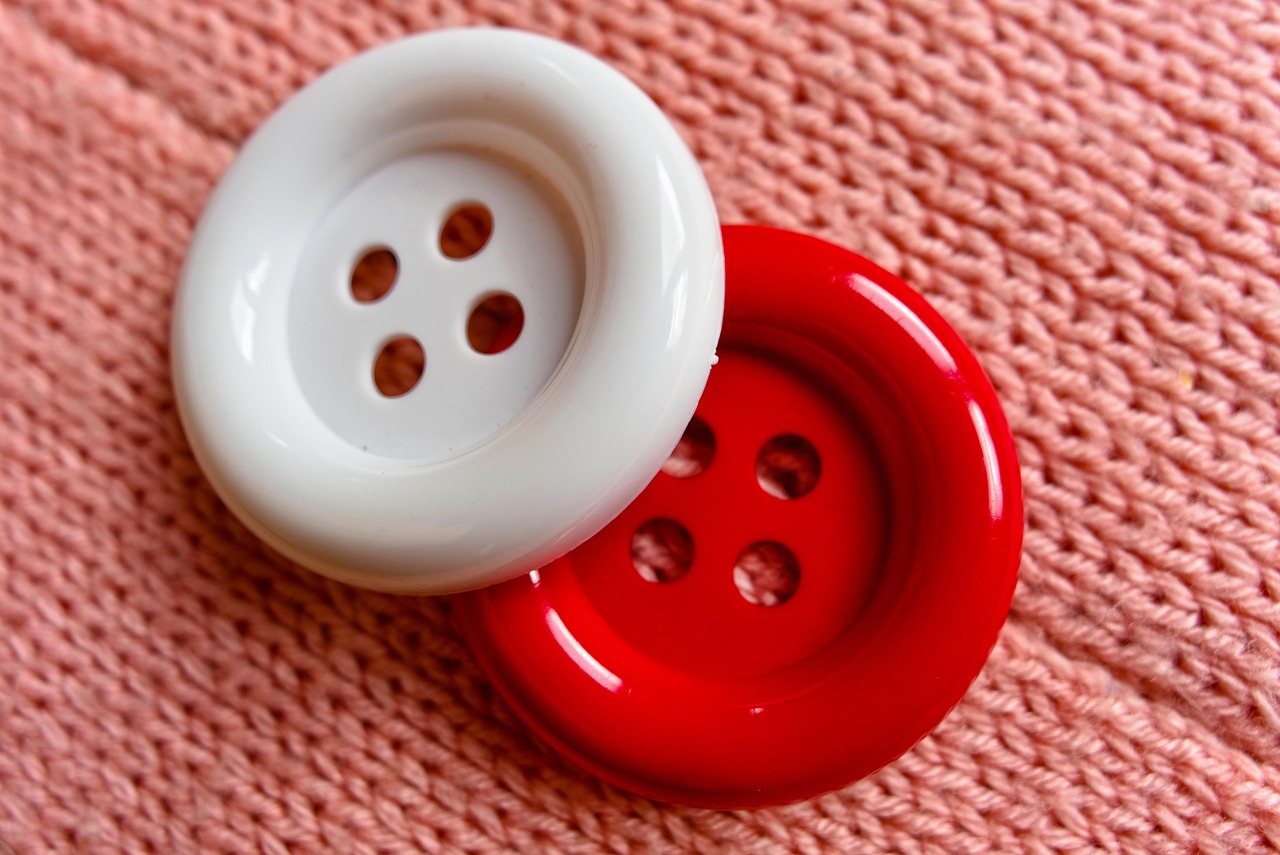
Buttons are widely used on shirts, coats, uniforms, bedding, and decorative soft goods. Sew-through buttons are attached with thread. Shank buttons lift the button away from the fabric surface and are useful on thicker materials. Tack buttons, often used on denim and workwear, are mechanically attached and can carry higher localized stress when the fabric is properly reinforced.
Buttons are repairable, cost-effective, available in many styles, and easy to vary by size. Their limitations are slower operation, possible thread wear, and reliance on stable buttonholes. On stretchy, loosely woven, or fraying fabrics, the buttonhole area often needs interfacing, bar tacks, or a facing layer to prevent distortion.
Snaps and press studs
Snaps, also called press studs, are used where quick opening and closing are required. Common applications include jackets, baby garments, sportswear, bags, covers, and upholstery panels. Ring snaps, spring snaps, magnetic snaps, and heavy-duty utility snaps perform differently, so a snap specification should include size, material, attachment style, and pull-strength expectations.
Snaps can fail by pulling out of the fabric, losing retention, cracking a cap, corroding, or becoming difficult to align. Quality control should check setting pressure, fabric reinforcement, cap deformation, open-close feel, and holding strength after laundering or flexing. ASTM textile standards include methods for evaluating snap holding strength and resistance to unsnapping, which are useful references when a product has safety or durability requirements.
Zippers
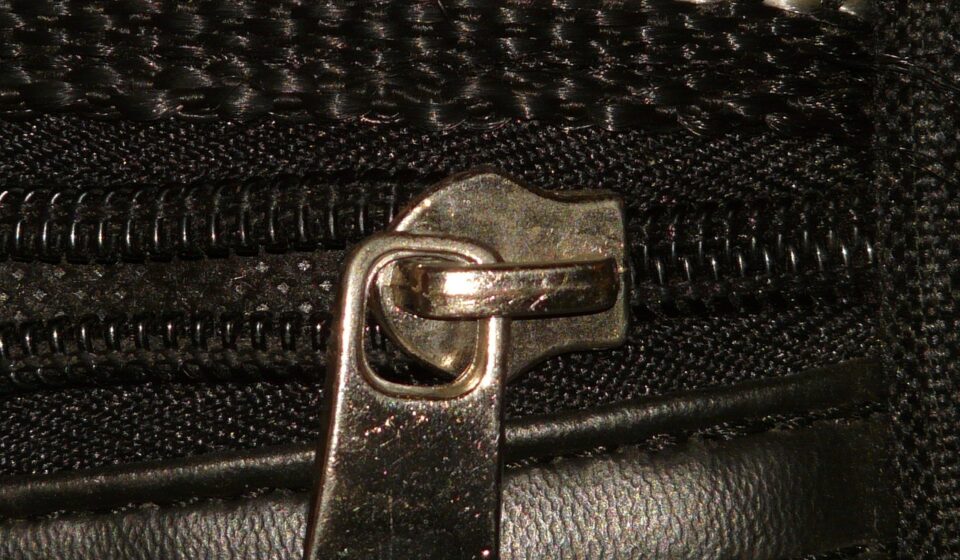
Zippers are used when a long opening must close quickly and evenly. They are common in jackets, trousers, bags, tents, cushion covers, footwear, and protective clothing. Coil zippers are flexible and often suit curved seams or lightweight products. Molded plastic zippers are common in outerwear and luggage. Metal zippers are often selected for denim, leather goods, and heavier applications where appearance and durability are important.
Important zipper specifications include chain size, tape material, slider type, open-end or closed-end construction, locking or non-locking puller, water-resistant treatment, and colorfastness requirements. ASTM D2061 is widely referenced for strength tests for zippers. Other ASTM zipper methods address finish durability, colorfastness, dimensions, salt spray resistance, and operability. In production, many zipper complaints come from poor alignment, fabric caught in the slider, weak box-and-pin attachment, or a zipper that is too stiff for the garment, rather than from the chain alone.
Hook-and-loop closures
Hook-and-loop tape is valued for adjustability, speed, and ease of operation with gloves or limited dexterity. It is used in footwear, medical supports, outdoor gear, children’s products, covers, straps, and technical textile assemblies. It works best where repeated adjustment is more important than a flat, dressy appearance.
The main drawbacks are lint buildup, noise during opening, abrasion against neighboring fabric, and reduced grip after contamination or repeated washing. Hook-and-loop should be positioned so the hook side does not scrape delicate knits, linings, or skin. ASTM D5169 is one recognized method related to shear strength of hook-and-loop touch fasteners, but product evaluation should also include peel behavior, laundering, edge lifting, and contamination scenarios.
Hooks, eyes, buckles, grommets, and eyelets
Hooks and eyes provide low-profile closure in waistbands, bras, formalwear, and hidden garment openings. Buckles and slides allow length adjustment in straps, bags, outdoor equipment, and workwear. Grommets and eyelets reinforce holes for lacing, ventilation, drawcords, banners, tarps, and footwear.
These components are small, but they concentrate stress. A poorly reinforced grommet can tear out of canvas. A buckle with a sharp edge can cut webbing. A hook-and-eye closure can open under bending if the hook geometry is too shallow. For all hardware-through-fabric fasteners, fabric construction, backing layer, hole preparation, setting die, and edge finish are as important as the metal or plastic component.
Comparison table for common fabric fasteners
| Fastener type | Typical strengths | Typical limitations | Good applications | Key checks |
|---|---|---|---|---|
| Buttons | Repairable, decorative, low profile, widely available | Slower to use, relies on buttonhole strength | Shirts, coats, bedding, uniforms | Button pull, thread security, buttonhole stability |
| Snaps | Fast operation, clean appearance, useful on panels | Can pull out if fabric is weak or setting is poor | Jackets, babywear, bags, covers | Setting pressure, holding strength, corrosion, small-parts risk |
| Zippers | Continuous closure, fast access, good alignment | Can jam, add stiffness, require precise sewing | Outerwear, trousers, luggage, tents | Strength, slider operation, tape sewing, laundering |
| Hook-and-loop | Adjustable, easy to operate, useful with gloves | Collects lint, may abrade fabrics, noisy opening | Sports gear, medical supports, straps | Peel, shear, edge lifting, contamination, wash durability |
| Grommets and eyelets | Reinforce holes, support lacing or ventilation | Localized tearing if unsupported | Canvas, tarps, footwear, banners, bags | Hole size, backing, crimp quality, edge smoothness |
| Buckles and slides | Adjustable load control, replaceable in many designs | May slip or damage webbing if mismatched | Straps, bags, outdoor gear, uniforms | Webbing width, slip resistance, edge radius, impact strength |
How to choose fabric fasteners for a product
A reliable selection process starts with use conditions, not appearance alone. A closure for a decorative cushion, a ski jacket, a medical brace, and a children’s sleeper may all be called a fabric fastener, but the risk profiles are different. The following criteria help create a practical specification before samples are ordered.
Match the fastener to fabric weight and structure
Lightweight fabrics usually need small, flexible, low-profile closures. Heavy canvas, denim, leather, and coated fabrics can accept stronger hardware, but they still require correct hole cutting and reinforcement. Knit fabrics stretch around concentrated loads, so snaps, rivets, and grommets may need backing tape or patches. Nonwovens and laminated fabrics can delaminate if the fastener places too much force at one point.
Check the direction of force
Fasteners are not stressed in only one direction. A jacket snap may be pulled outward when the wearer moves. A bag zipper may face crosswise tension when the bag is overfilled. A strap buckle may see repeated bending and sliding. Hook-and-loop closures can perform differently in peel and shear. Good specifications identify the actual force direction and then choose a test method or in-house inspection that simulates it. See also: Buying Guides.
Consider care conditions and chemical exposure
Laundering, dry cleaning, bleach, sweat, salt spray, sunscreen, and industrial washing can affect both the textile and the hardware. A decorative coating on a zipper pull can dull after washing. Metal snaps may corrode if plating is weak. Hook-and-loop can lose performance when lint or fibers accumulate. AATCC laundering methods and ASTM zipper finish or colorfastness methods are often used as references when a product must keep its appearance and function after repeated care cycles.
Plan for skin contact and safety
Fasteners on garments, bedding, children’s products, and medical textiles should be reviewed for sharp edges, nickel release concerns, detachable small parts, and skin irritation. In the United States, the Consumer Product Safety Commission administers small-parts rules for certain products intended for children under three, while children’s apparel and accessories can also be affected by other product-specific requirements. In the European Union, REACH restrictions include nickel release limits for items such as rivet buttons, zippers, and metal components when they are used in garments and come into direct and prolonged skin contact. Certification systems such as OEKO-TEX Standard 100 also evaluate textile articles and accessories for harmful substances, but certification scope and product class should be checked rather than assumed.
Quality control points that prevent failures
Most fastener failures come from a mismatch between fastener, fabric, setting process, or use condition. A basic inspection plan can catch many issues before bulk production.
- Confirm the full specification. Record material, finish, size, color, tape width, cap diameter, prong length, slider type, backing washer, and any other details that affect performance.
- Test on the actual fabric. A snap that passes on woven cotton may fail on stretch knit or coated fabric. A grommet that works on two layers may tear out on one layer.
- Inspect reinforcement. Interfacing, backing patches, bartacks, seam allowances, and stitch density should be reviewed before judging the fastener itself.
- Check setting equipment. Dies that are worn, misaligned, or wrong for the component can crack caps, over-compress parts, or leave loose attachments.
- Review after care cycles. Wash, dry, iron, or dry-clean samples according to the intended care label, then check function, appearance, staining, corrosion, and fabric distortion.
- Control sharp edges. Feel the underside of snaps, rivets, buckles, eyelets, and zipper stops. Burrs can damage skin, linings, and adjacent fabric.
- Document acceptable force ranges. A snap can be too weak, but it can also be too strong if opening it tears the fabric or creates usability problems.
Specification notes for sourcing teams
When sourcing fabric fasteners, vague terms create disputes. Words such as heavy duty, strong, rustproof, washable, or premium should be translated into measurable or inspectable criteria. A useful specification may state the component material, plating or coating, dimensions, attachment method, intended fabric layers, color tolerance, care test, pull test, corrosion expectation, and sample approval procedure.
For metal fasteners, ask whether the part is brass, stainless steel, zinc alloy, iron, aluminum, or plated base metal. Corrosion behavior, magnetic response, strength, and skin-contact suitability can differ by material. For plastic fasteners, identify the resin when possible, especially if the product may face heat, outdoor exposure, impact, or repeated flexing. For textile-based fasteners such as hook-and-loop tape and zipper tape, fiber content, dyeing quality, and shrinkage behavior can matter as much as the visible hardware.
Color matching also deserves attention. A black zipper tape, black puller, black snap cap, and black fabric may all look acceptable under office lighting but differ under daylight or after washing. If the finished product has a premium appearance requirement, approve components on the actual fabric under defined lighting and after the relevant care process.
Packaging and handling are part of quality control. Zipper teeth can deform if compressed. Plated parts can scratch when mixed loosely in bulk. Hook-and-loop can collect lint before sewing. Snaps and eyelets can be confused when similar sizes use different prong lengths. Clear labeling and batch separation reduce avoidable assembly defects.
Practical selection workflow
- Define the function. Decide whether the fastener closes, adjusts, reinforces, decorates, supports load, or allows repair.
- Map the stress. Identify pull, peel, shear, bending, abrasion, and cyclic opening requirements.
- Choose the fastener family. Compare buttons, snaps, zippers, hook-and-loop, hooks, buckles, grommets, or combined systems.
- Design the fabric interface. Add interfacing, backing, patches, seam allowance, bartacks, or tape where needed.
- Sample with the final materials. Test on the real fabric, lining, coating, thread, and care process.
- Set measurable approval criteria. Include dimensions, appearance, open-close feel, pull strength, care performance, and safety review.
- Inspect bulk production. Check incoming components, setting quality, finished product function, and post-care performance when required.
This workflow is simple by design. It helps prevent a common sourcing problem: choosing a fastener from a catalog image and only later discovering that the fabric, laundering process, or safety requirement makes it unsuitable.
Frequently asked questions
What are the most common fabric fasteners?
The most common fabric fasteners are buttons, snaps, zippers, hook-and-loop tape, hooks and eyes, buckles, grommets, eyelets, and lacing systems. Many products combine several types, such as a zipper with a snap storm flap or a buckle with hook-and-loop adjustment.
Are metal fasteners always stronger than plastic fasteners?
No. Strength depends on material grade, geometry, fabric reinforcement, attachment method, and stress direction. Some engineered plastic buckles and molded zippers perform well in outdoor or lightweight products, while poorly plated metal parts may corrode or damage fabric. The comparison should be based on the final application and test requirements.
Which fasteners are best for children’s clothing?
There is no single best choice. Children’s clothing fasteners should be evaluated for secure attachment, choking or small-parts risk where applicable, sharp edges, laundering durability, and ease of use. Snaps, buttons, zippers, and hook-and-loop can all be suitable when properly specified and tested for the age group and product category.
How do I prevent snaps or eyelets from tearing out of fabric?
Use the correct component size, match prong or barrel length to the fabric thickness, prepare clean holes, add backing or reinforcement, and use the correct setting die and pressure. Testing should be done on production fabric layers, not only on a sample swatch of different material.
Do fabric fasteners need standards testing?
Not every project requires formal laboratory testing, but standards are valuable when safety, durability, export compliance, or brand quality requirements are involved. ASTM, AATCC, CPSC, EU REACH, and OEKO-TEX references can help define what should be tested. Exact requirements depend on product type, market, age group, materials, and claims made on the label or sales page.