How to find fasteners near me and choose the right supplier
What a local fastener search should solve
When buyers search for “fasteners near me,” they usually need more than the closest box of bolts. The practical goal is to find the correct fastener, in the right specification, available when the job needs it, with enough documentation to reduce the risk of installation failure, downtime, or rework.
A nearby supplier can be useful for urgent maintenance, jobsite shortages, prototype work, and small-batch purchasing. Location still should not be the only deciding factor. Thread type, material, strength grade, coating, dimensional standard, packaging, traceability, and the service environment can all affect whether a fastener is suitable. Treating fasteners as interchangeable commodity items is where many purchasing problems start.
For more industry background and related buying guides, visit the Fasteners section.
Match the fastener to the application before comparing stores
The fastest way to buy the wrong part is to start with a vague description such as “a stainless bolt” or “a concrete screw.” A useful local search starts with the application. Is the fastener holding structural steel, joining sheet metal, fixing timber, clamping a gasket, anchoring equipment to concrete, or securing a removable access panel? Each situation points to different performance requirements.
For general maintenance, a replacement fastener should usually match the original thread size, length, head style, drive type, material, and strength class unless an engineer or qualified technician approves a change. For new work, buyers should check the drawing, bill of materials, project specification, equipment manual, or relevant code requirement before contacting suppliers. In construction and industrial work, the difference between a visually similar fastener and a specified fastener can be significant.
Key details to identify include:
- Thread system: inch, metric, coarse thread, fine thread, or a specialty thread.
- Diameter and length: measured according to the relevant fastener type, not guessed from overall appearance.
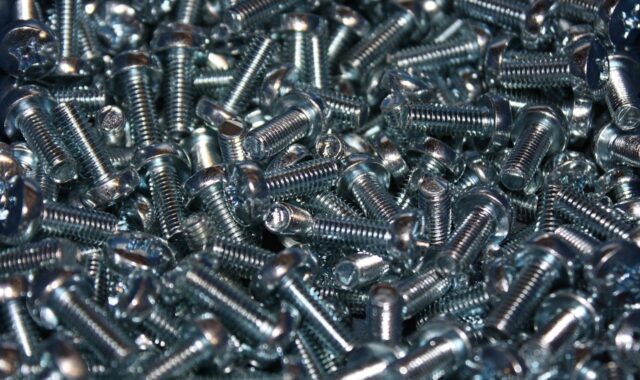
- Head and drive style: hex, socket, pan, flat, flange, Phillips, Torx-style, slotted, or other forms.
- Material: carbon steel, alloy steel, stainless steel, brass, aluminum, nylon, or another material.
- Strength grade or property class: needed when load capacity, preload, or safety is relevant.
- Surface finish: plain, zinc plated, hot-dip galvanized, black oxide, phosphate, mechanical galvanizing, or other coatings.
- Environmental exposure: indoor dry use, outdoor weather, salt spray, chemicals, high temperature, or vibration.
Understand the main local supplier types
A “fasteners near me” search can return several types of suppliers, and they do not all serve the same buying need. A hardware store may be convenient for small household quantities, but it may not carry certified industrial grades. An industrial distributor may offer better technical depth, while account setup or minimum order values can be less convenient for one-off purchases. A construction supply house may be strong in anchors, threaded rod, washers, and site consumables. A specialty fastener distributor may be the better fit for uncommon materials, large diameters, specialty standards, or documentation.
| Supplier type | Common strengths | Possible limitations | Best use case |
|---|---|---|---|
| Retail hardware store | Convenient locations, small packs, quick replacement items | Limited grades, limited certification documents, narrower industrial range | Home repair, light maintenance, noncritical replacements |
| Industrial distributor | Broader sizes, bulk packaging, better technical support, documentation options | May require account setup or minimum order value | Manufacturing, maintenance, repair, operations, repeat purchasing |
| Construction supply house | Anchors, threaded rod, jobsite materials, concrete and steel accessories | May focus less on machine screws or specialty precision fasteners | Contractors, installers, jobsite replenishment |
| Specialty fastener supplier | Hard-to-find standards, materials, coatings, and technical sourcing | Lead times may vary for unusual items | Engineered parts, uncommon alloys, special drawings, large-volume programs |
Check standards, grades, and markings carefully
Fasteners are often controlled by dimensional and material standards. Organizations such as ASTM, ISO, ASME, SAE, DIN, and IFI publish specifications that define dimensions, mechanical properties, materials, finishes, testing, or identification practices for different fastener families. Buyers do not need to memorize every standard, but the supplier should understand what the requested standard means and should not substitute a different part without clear approval.
Grade markings are especially important on bolts and screws used in load-bearing applications. Inch-series bolts may use radial line markings, while metric fasteners often use property class numbers. Stainless fasteners use different identification practices, and corrosion resistance does not automatically mean the same strength as alloy steel fasteners. Washers and nuts also need compatible specifications; using a high-strength bolt with an unsuitable nut or washer can weaken the assembly.
When contacting a local supplier, describe the specification clearly. For example, “1/2-13 x 2 inch hex cap screw, Grade 8, zinc plated” is much more useful than “strong half-inch bolt.” For metric parts, “M12 x 1.75 x 50 mm, property class 10.9, plain finish” gives the supplier a clearer target. If the application is structural, pressure-containing, safety-related, or regulated, request documentation before purchase rather than after installation.
Compare material and coating for the real environment
Material and coating choices should reflect the operating environment. Carbon steel fasteners are common and economical, but they normally need a protective finish when corrosion is a concern. Zinc plating is widely used for indoor and mild environments, but it is not the same as hot-dip galvanizing. Hot-dip galvanized fasteners are often selected for outdoor construction and heavier corrosion exposure, although the coating thickness can affect thread fit and compatibility with matching nuts.
Stainless steel is often chosen for corrosion resistance, food-related environments, marine-adjacent use, or a clean appearance. However, stainless grades differ. A2 or 304-type stainless is common for general corrosion resistance, while A4 or 316-type stainless is often preferred where chloride exposure is more severe. Even then, stainless is not immune to corrosion under all conditions. Crevice corrosion, galvanic corrosion, chemical exposure, and poor drainage can still cause problems.
Buyers should also consider material compatibility. Combining dissimilar metals in wet environments can accelerate galvanic corrosion. A stainless screw in aluminum, a zinc-plated fastener against copper, or an unprotected steel fastener in pressure-treated wood may create durability issues. Local suppliers can often suggest common alternatives, but final selection for critical applications should follow project specifications or engineering guidance.
Ask better questions before visiting or ordering
A local supplier can only help quickly if the buyer provides enough information. Before visiting a counter or placing a phone order, prepare a short checklist. It saves time, reduces unapproved substitutions, and helps the supplier confirm whether the item is in stock.
- What is the exact size, thread pitch, and length?
- Is the measurement inch or metric?
- What head style and drive style are required?
- What grade, property class, or material is specified?
- What coating or finish is needed?
- How many pieces are required now, and will repeat orders be needed?
- Is a certificate of conformance, mill test report, or lot traceability required?
- Can an equivalent part be accepted, or must it match the specification exactly?
- Will the fastener be exposed to water, salt, chemicals, vibration, or heat?
For replacement work, bring the old fastener if possible, but do not rely on appearance alone. A worn or stretched bolt may no longer measure correctly. Thread gauges, calipers, and sample nuts can help confirm the correct thread, but the application requirements still matter.
Evaluate local availability without ignoring total cost
The nearest option is not always the lowest-cost option, and the lowest shelf price is not always the best value. A fastener that fails, seizes, corrodes too early, or does not meet the required standard can cost more than its purchase price through labor delays, damaged assemblies, rejected inspections, or equipment downtime. See also: Buying Guides.
When comparing suppliers, look beyond distance and unit price. Useful comparison factors include stock depth, package quantity, documentation, return policy, technical knowledge, delivery options, and consistency across repeat orders. If the same job requires bolts, nuts, washers, anchors, drill bits, sealants, and installation tools, a supplier with broader jobsite support may reduce transaction time even if one item costs slightly more.
For businesses, repeatability is often more important than a one-time discount. A distributor that can label bins, provide consistent part numbers, maintain lot records, and support scheduled replenishment may reduce purchasing errors. For small buyers, clear packaging and accurate labeling are equally valuable because mixed bins and unlabeled fasteners can create confusion later.
Watch for common buying mistakes
Many fastener problems begin with small assumptions. One common mistake is replacing a graded bolt with an ungraded bolt because the diameter and length appear similar. Another is mixing metric and inch threads that seem close enough to start by hand. Cross-threading, poor clamp load, or hidden damage can follow. A third mistake is choosing stainless steel solely because it looks better, even when strength, galling risk, cost, or compatibility point to another material.
Coating mismatch is also common. For example, a plated nut may not be suitable for a hot-dip galvanized bolt if thread fit is affected. In outdoor or corrosive environments, using a bright zinc part where a heavier coating or stainless material is specified can shorten service life. In vibration-prone assemblies, buyers may need prevailing torque nuts, lock washers, thread-locking compounds, or engineered locking features, but those choices should match the application rather than be added randomly.
Anchor selection deserves special caution. Concrete anchors, wedge anchors, sleeve anchors, screw anchors, and adhesive anchors are not interchangeable. Base material, hole diameter, embedment depth, edge distance, spacing, load direction, installation torque, and approval requirements can all affect performance. For safety-related anchoring, follow the project documents and manufacturer installation instructions.
Frequently asked questions
What should I type when searching for fasteners near me?
Use the keyword plus the specific part or application. Searches such as “stainless M8 socket head screws near me,” “Grade 8 hex bolts near me,” or “concrete anchors near me” are more useful than a broad search alone. If you need documents, add terms such as “certificate of conformance” or “industrial fastener distributor.”
Can a hardware store fastener replace an industrial fastener?
Sometimes, but not always. For light, noncritical use, a retail fastener may be acceptable if the size, material, and function match. For structural, mechanical, safety-related, or specified work, the replacement should match the required standard, grade, material, and finish. When in doubt, check the drawing, manual, project specification, or a qualified professional.
Is stainless steel always better than zinc-plated steel?
No. Stainless steel often provides better corrosion resistance in many environments, but it can cost more and may have different strength properties. Zinc-plated steel can be suitable for indoor or mild conditions. The better choice depends on load, exposure, compatibility, appearance, budget, and specification requirements.
Why do suppliers ask for thread pitch?
Thread pitch identifies the distance or count of threads and helps prevent mismatches. Metric fasteners are usually described by the distance between threads, while inch fasteners are commonly described by threads per inch. Two fasteners can have a similar diameter but incompatible threads.
Should I buy fasteners in bulk locally?
Bulk purchasing can make sense for repeat maintenance, production, or construction use. Before buying large quantities, confirm the specification, storage conditions, labeling, and whether the same part will be used consistently. For occasional repairs, smaller packs may reduce waste and confusion.
Final checklist for choosing a nearby fastener source
A good local fastener purchase balances speed with specification control. Start with the application, identify the exact size and standard, confirm material and coating, then compare suppliers based on stock, documentation, technical support, and repeatability. A nearby counter can solve an urgent shortage, but the best result comes from asking precise questions before buying.
For noncritical household jobs, convenience may be enough. For industrial, construction, vehicle, equipment, or safety-related work, treat fasteners as engineered components. The right supplier is not simply the closest result on a map; it is the source that can provide the correct part, explain reasonable alternatives, and help reduce the risk of using a fastener that only looks right.