Easy pool maintenance tips for safer, clearer water
A simple pool routine works better than emergency fixes
Easy pool maintenance tips are most useful when they make pool care repeatable. For most homeowners, the core jobs are clear: test and balance the water, remove debris before it sinks, keep water circulating, brush pool surfaces, clean the filter, and check visible safety hardware. The U.S. Centers for Disease Control and Prevention advises pool owners to pay close attention to disinfectant level and pH because these are the first line of defense against germs in treated recreational water.
In a backyard pool, small checks done on a steady schedule usually prevent larger problems, including cloudy water, algae growth, clogged filters, corrosion, scaling, and unnecessary chemical use. This guide focuses on practical homeowner maintenance rather than commercial pool operation. For more upkeep ideas across the home and outdoor areas, browse the Maintenance Tips section.
Test the water before adding chemicals
Pool care becomes harder when chemicals are added based on appearance alone. Clear water can still be out of balance, and cloudy water can have several causes. A basic test kit or reliable test strips should help you check at least pH and sanitizer. Many pool owners also monitor total alkalinity, calcium hardness, and stabilizer, especially in outdoor pools exposed to sunlight.
CDC guidance for home pools recommends keeping pH in the 7.0–7.8 range. It also recommends at least 1 ppm chlorine in pools, or at least 2 ppm when cyanuric acid or stabilized chlorine products are used. If you use bromine instead of chlorine, follow the product label and the equipment manufacturer’s instructions. The most suitable operating range may also depend on local codes, pool surface type, and the chemical system installed.
For a manageable routine, test the pool several times a week during swimming season. Test again after heavy use, strong rain, extreme heat, or any visible change in the water. Public pool operators follow more frequent testing rules, but the homeowner lesson is the same: sunlight, swimmers, leaves, sweat, sunscreen, and rain can change water conditions quickly.
- If pH is too high, chlorine becomes less effective and scale may form on surfaces or equipment.
- If pH is too low, water can become corrosive and may irritate eyes or damage metal parts.
- If sanitizer is too low, the pool is more likely to develop algae or allow germs to survive.
- If stabilizer is too high, chlorine can become less efficient, so dilution or professional advice may be needed.
Follow a simple daily, weekly, and monthly checklist
Pool maintenance is easier when tasks are grouped by frequency. The aim is not to spend hours on the pool every day; it is to keep small issues from becoming large ones. A skimmer net, wall brush, vacuum or robotic cleaner, test kit, telescoping pole, and clean chemical storage area cover most routine needs.
| Frequency | Maintenance task | Why it matters |
|---|---|---|
| Daily or before swimming | Skim leaves, insects, and floating debris | Debris uses up sanitizer, stains surfaces, and can clog baskets |
| 2–3 times per week | Test pH and sanitizer | Small corrections are easier than large chemical adjustments |
| Weekly | Brush walls, steps, corners, and tile line | Brushing removes biofilm and algae before it spreads |
| Weekly | Vacuum the floor or run a pool cleaner | Sediment and organic material are removed before they decay |
| Weekly | Empty skimmer and pump baskets | Good water flow helps the pump and filter work efficiently |
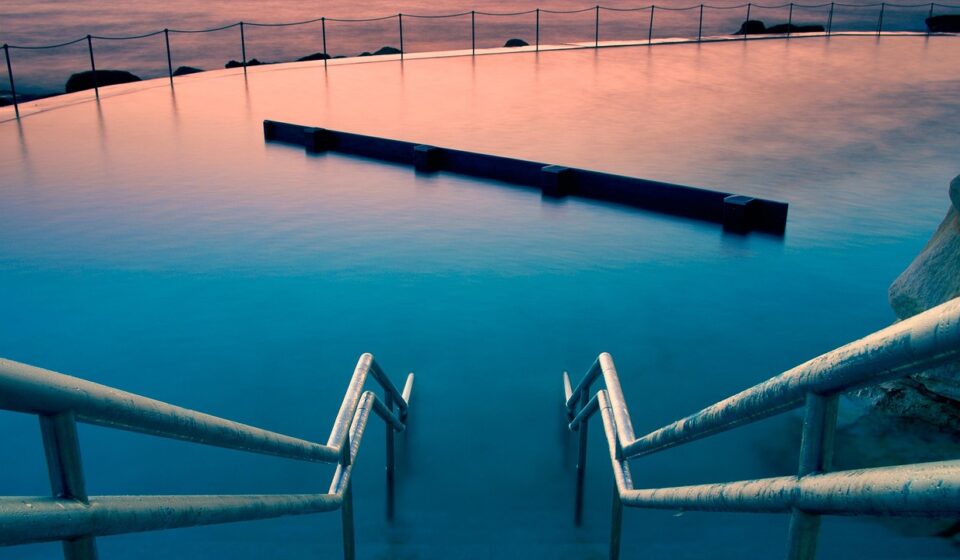
| Monthly | Inspect ladders, handrails, gates, drain covers, and visible fittings | Loose, cracked, or corroded parts can become safety hazards |
During peak summer use, the schedule may need to tighten. A pool used by many swimmers, pets, or children will usually need more frequent skimming, testing, and filter attention than a lightly used pool kept under a cover.
Keep water moving and protect the filter
Circulation is one of the most overlooked parts of easy pool maintenance. Chemicals cannot work evenly in stagnant water, and the filter cannot remove debris that never reaches it. Good circulation pulls water through the skimmer and main drain, sends it through the pump and filter, and returns cleaner water to the pool.
There is no single pump run time that fits every pool. Pool volume, pump size, plumbing design, weather, bather load, filter type, and energy settings all matter. Instead of copying a fixed number of hours from another pool owner, check the equipment manual and watch the water. If debris sits in dead zones, the surface looks dull, or algae appears in corners, circulation may need adjustment.
Filter care depends on the filter type:
- Cartridge filters usually need periodic removal and rinsing. Avoid damaging the pleats with excessive water pressure.
- Sand filters are commonly cleaned by backwashing when the pressure gauge indicates restricted flow, based on the manufacturer’s instructions.
- Diatomaceous earth filters require careful backwashing and replacement of filter media according to the product directions.
Do not ignore the pressure gauge. A rising pressure reading often means water is struggling to pass through the filter. A very low reading can point to blocked baskets, low water level, air leaks, or pump problems. Keeping baskets clean and maintaining the correct water level are two simple ways to reduce pump strain.
Prevent algae before it turns the pool green
Algae prevention is easier than algae removal. Algae often starts in low-circulation areas such as steps, corners, behind ladders, around light niches, and along shaded walls. Brushing these areas weekly helps break up early growth so sanitizer and filtration can work effectively.
After storms, remove leaves and dirt as soon as practical. Rain can dilute pool chemicals, wind can add organic debris, and runoff can introduce contaminants if the pool deck drains poorly. Test the water after severe weather instead of assuming the previous balance still applies.
Pool covers help, but they do not replace testing. A cover can reduce debris and sunlight exposure, yet covered water can still lose sanitizer or become imbalanced. When opening a covered pool, inspect the water, clean the cover before removing it if possible, and restart circulation before making major chemical corrections.
When shocking may be appropriate
Many homeowners use the word shock to mean adding a larger dose of oxidizer or sanitizer. This may be appropriate after heavy swimming, visible algae, strong combined chlorine odor, or contamination events, but it should be done according to the chemical label. More is not automatically better. Adding incompatible products together, broadcasting chemicals incorrectly, or swimming too soon after treatment can create safety problems. See also: Buying Guides.
Handle chemicals with safety in mind
Pool chemicals disinfect water and help protect surfaces and equipment, but they can be dangerous when stored or handled carelessly. CDC pool chemical safety guidance emphasizes reading labels, using appropriate protective equipment, keeping chemicals away from children and pets, and avoiding accidental mixing.
A basic storage system can prevent many problems. Keep chemicals in their original containers with labels intact. Store them in a cool, dry, ventilated place away from direct sunlight, moisture, fuels, paints, metal tools that may corrode, and household cleaners. Never mix old and new chemicals, never combine different chlorine products, and never add water to chemicals unless the product label specifically instructs you to do so.
When adding chemicals to the pool, use clean, dry measuring tools and add products separately. Allow circulation time between additions when required by the label. If a product spills, follow the label instructions for cleanup. If you smell a strong chemical reaction, see gas or smoke, or feel burning in your eyes or throat, move away from the area and contact emergency services or the appropriate local authority.
Inspect hardware, barriers, and visible safety parts
Pool maintenance is not only about water clarity. The Consumer Product Safety Commission highlights barriers, supervision, and drain safety as important parts of pool and spa safety. For a homeowner, a monthly hardware inspection is a practical habit.
Check that gates self-close and self-latch as intended. Look for loose screws, rusted hinges, worn latch hardware, broken fence sections, unstable handrails, cracked ladder treads, sharp edges, damaged drain covers, and loose deck fittings. If a drain cover is cracked, missing, loose, or past its marked service life, keep swimmers out of the pool until it is properly addressed by a qualified professional.
For metal parts, corrosion-resistant materials matter. Stainless steel hardware, suitable anchors, exterior-rated fasteners, and compatible replacement fittings can reduce premature failure in wet, chlorinated environments. Compatibility still depends on the pool design and local conditions, so replacement parts should match the manufacturer’s requirements rather than simply looking similar.
- Confirm that rescue equipment is visible and accessible.
- Keep electrical devices and extension cords away from wet pool areas.
- Repair broken deck surfaces that could cause trips or cuts.
- Use non-slip materials where appropriate on steps and walking surfaces.
- Make sure pool lights, timers, and pumps are serviced by qualified professionals when electrical work is involved.
Avoid common maintenance mistakes
Most pool problems start with small habits that seem harmless. Avoiding these mistakes keeps the routine easier and reduces the chance of expensive repairs.
- Adding chemicals without testing: This can create imbalance and waste money.
- Ignoring pH: Sanitizer performance, swimmer comfort, scale control, and corrosion risk are all connected to pH.
- Letting debris sit: Leaves and dirt consume sanitizer and can stain surfaces.
- Skipping brushing: A vacuum removes loose debris, but brushing disrupts growth on surfaces.
- Running the pump with clogged baskets: Restricted flow makes the system work harder.
- Backwashing too often: Some filters work best with a small amount of captured debris; follow the pressure gauge and manufacturer guidance.
- Mixing chemicals: Incompatible chemicals can react violently or release hazardous gases.
- Forgetting hardware checks: Loose gates, damaged ladders, and drain cover problems are maintenance issues as well as safety concerns.
Frequently asked questions
How often should I test my home pool water?
During swimming season, test pH and sanitizer several times per week and after heavy use, storms, heat waves, or visible water changes. If the pool is used daily, testing more often is a good habit. Always follow the chemical product label and local requirements where they apply.
Why is my pool cloudy even when chlorine is present?
Cloudy water can come from poor filtration, high pH, fine debris, algae beginning to grow, heavy swimmer load, or an imbalance in alkalinity or calcium hardness. Start by testing the water, checking circulation, cleaning baskets, and inspecting the filter before adding multiple chemicals.
Do I still need to brush the pool if I use a robotic cleaner?
Yes. A robotic cleaner helps remove debris from the floor and some wall areas, but it may miss corners, steps, behind ladders, tile lines, and other low-flow areas. Brushing those surfaces weekly helps prevent algae and buildup.
What is the easiest way to reduce pool maintenance?
Use a cover when the pool is not in use, skim debris early, keep baskets clean, test water before adjusting chemicals, maintain proper circulation, and fix small hardware problems before they grow. Consistency reduces emergency cleaning and chemical correction.
When should I call a pool professional?
Call a qualified professional for electrical work, pump or heater repairs, underground leaks, cracked structural components, damaged drain covers, repeated algae problems, or water chemistry issues that do not respond to normal testing and adjustment. Professional help is also wise when opening a neglected pool or replacing safety-critical parts.