Metal shaping tools for sheet metal work and shop fabrication
The short answer
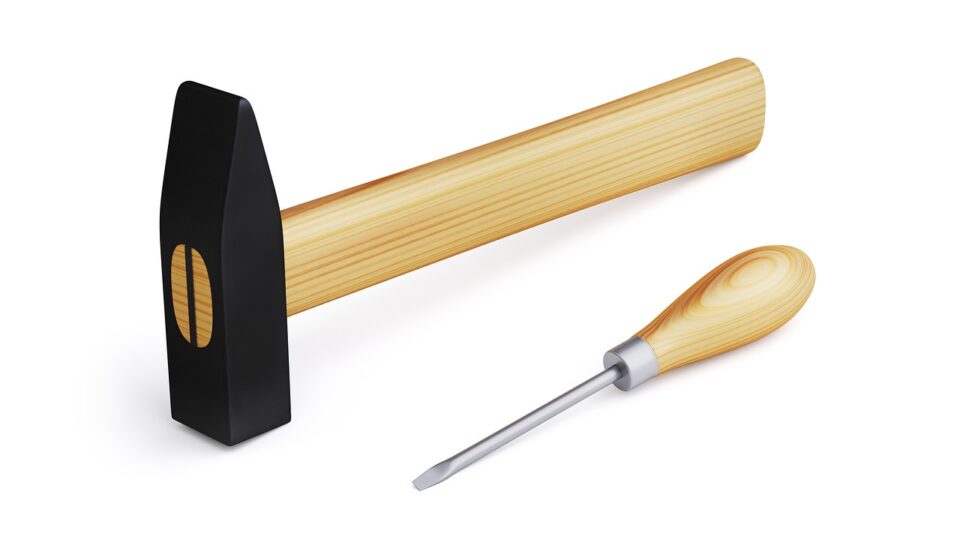
Metal shaping tools are best understood as a working system, not as one product category. In sheet metal work and light fabrication, the right choice depends on the forming operation: a hammer and dolly for local correction, a brake for straight bends, a slip roll for curves, a shrinker-stretcher for edge control, an English wheel for smooth compound curves, a bead roller for ribs and flanges, and presses or dies where repeatable force is needed. The practical choice is rarely the tool with the highest force rating. It is the tool that controls deformation, supports the workpiece, suits the material thickness and alloy, and can be used safely. For related workshop equipment topics, see the Tools and Accessories category.
What counts as metal shaping?
Metal shaping means changing the form of a metal workpiece through plastic deformation. In practical shop terms, the material is pushed, stretched, compressed, bent, rolled or drawn into a new shape. This differs from cutting, drilling or welding, although a finished part often goes through several of those operations in sequence.
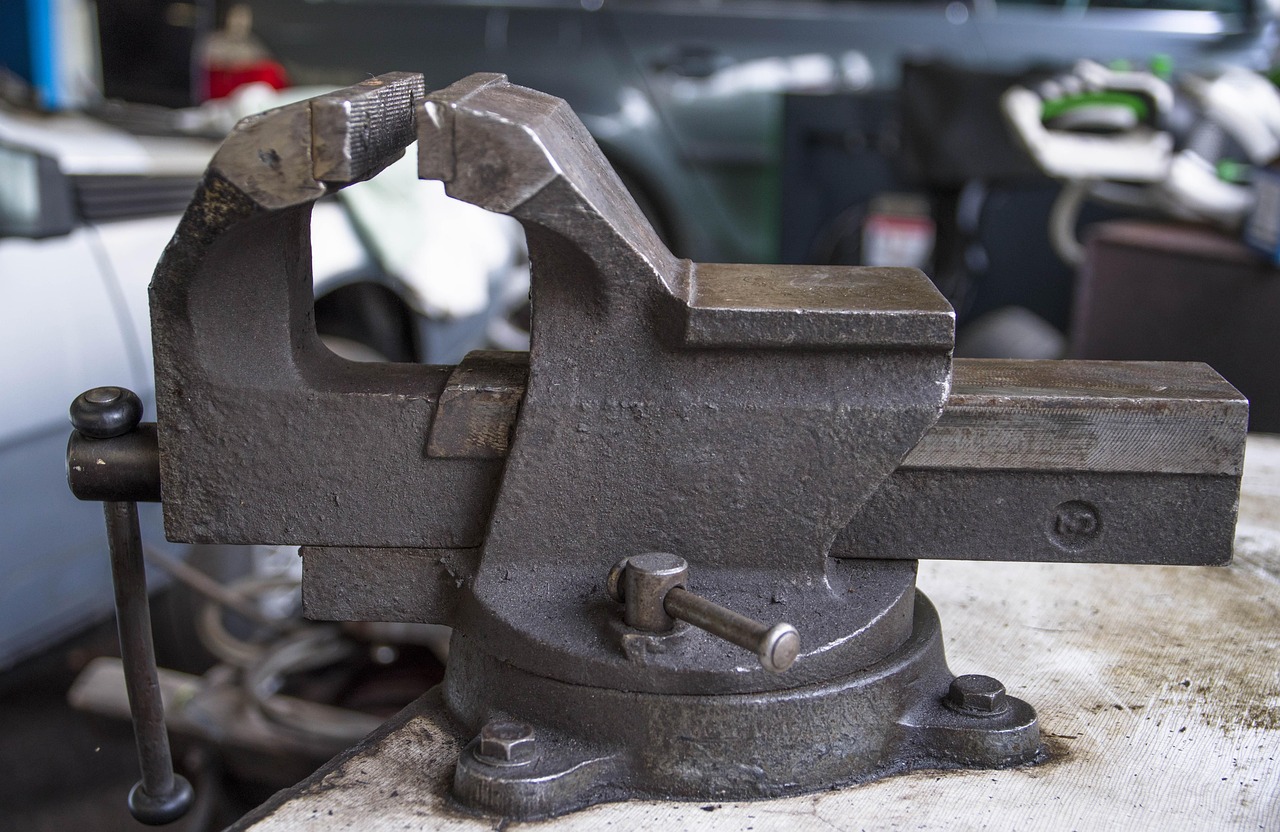
Technical references from ASM International describe sheet metal forming through operations such as bending, flanging, deep drawing, stamping, spinning, clinching and crimping. A small workshop may not use industrial terminology for every process, but the same principle applies: the tool must control where the metal moves and where it is supported.
That is why a shaped part is often produced with several tools rather than one machine. A fabricator may cut a blank, bend the main flange, shrink an edge, smooth the surface with a planishing hammer, and then check the final profile against a template. The sequence of operations matters as much as the tool list.
Main types of metal shaping tools
The table below groups common tools by the work they are best suited to. Capacity varies by brand, throat depth, tooling quality and material, so treat it as a selection guide rather than a replacement for the manufacturer’s rating.
| Shaping task | Common tools | Typical use | Key limitation |
|---|---|---|---|
| Local forming and correction | Body hammers, mallets, dollies, stakes, forming bags | Small panels, repair work, controlled dents and curves | Skill-dependent and slower on repeat parts |
| Straight bends | Hand brakes, box and pan brakes, press brakes | Flanges, boxes, brackets and enclosure panels | Requires correct bend radius and allowance planning |
| Curved sheets and cylinders | Slip rolls, pyramid rolls, ring rollers | Cones, cylinders, guards, duct sections and curved panels | Ends may need pre-bending or finishing |
| Edge shrinking and stretching | Shrinker-stretchers, tuck shrinking tools | Wheel arches, flanges, compound edges and curved profiles | Marks may need planishing or sanding |
| Smooth compound curves | English wheels, planishing hammers | Panels needing broad, gradual curvature | Requires practice to avoid over-stretching |
| Ribs and stiffening details | Bead rollers, tipping dies, swaging machines | Decorative lines, stiffening beads and turned edges | Setup alignment strongly affects consistency |
| Repeat force and dies | Arbor presses, hydraulic presses, mechanical power presses | Pressing, forming, punching and die work | Guarding, tooling and procedure become critical |
How to choose the right tool for the job
Start with the operation, not the tool name
A common buying mistake is to choose a tool because it appears in a metalworking video or catalog, then look for jobs it can handle. A better approach is to define the operation first. Do you need a clean 90-degree bend, a gradual radius, a raised bead, a stretched crown, a shrunk flange or a repeatable pressed feature? Each of those tasks moves metal in a different way.
If the work is mostly brackets, boxes and covers, a brake will usually be more useful than an English wheel. If the work involves curved panels, guards or decorative sheet sections, rolling, shrinking and smoothing tools become more important. For high-volume repeat work, tooling and fixtures may matter more than the base machine.
Match capacity to the real material
Thickness ratings are only useful when the material type is also considered. Mild steel, stainless steel, aluminum, copper and brass can behave very differently under the same tool. Stainless steel generally requires more force and more springback control than mild steel of the same thickness, while softer aluminum may mark more easily if the tooling surface is rough.
For that reason, a workshop should avoid choosing a tool that will always operate at the edge of its stated capacity. A brake, roll or press that is regularly overloaded will produce less consistent parts and wear faster. Capacity margin is especially important when working with wider panels, harder alloys or tighter bend radii.
Consider geometry and access
Two tools with similar force ratings can perform very differently because of throat depth, die opening, clamping method and frame stiffness. A small brake may bend a narrow test coupon cleanly but struggle with a wide door panel. A shrinker-stretcher may have enough forming power but not enough reach for the flange location. An arbor press may have adequate tonnage but insufficient daylight for the fixture.
Before buying, map the largest part you expect to make. Check workpiece width, flange height, return bends, inside corners and whether the part must be rotated during forming. Many equipment mistakes are really access mistakes.
Plan for finish quality
Metal shaping is not only about reaching the required shape; it is also about controlling the surface. A structural bracket may tolerate light tooling marks. A visible panel, appliance cover or architectural component may not. For better surface quality, smooth tooling, protective films, polished dollies, clean dies and gradual forming passes are often more useful than extra force.
For curved panels, light repeated passes usually give better control than one aggressive pass. Over-stretching is difficult to reverse, and excessive hammering can create thin spots or uneven tension. A template, contour gauge or trial blank can prevent avoidable rework.
Setup details that affect bend and shape accuracy
Small setup details have a large effect on finished parts. The most important are bend radius, bend allowance, clamping pressure, die alignment and springback. Springback is the tendency of metal to partially return toward its original shape after force is released. Harder alloys, larger radii and higher-strength materials usually require more attention to over-bending or other compensation. See also: Buying Guides.
For straight bends, the inside radius should be compatible with the material and thickness. A radius that is too tight can cause cracking, especially in harder tempers or along an unfavorable grain direction. For rolled sheet, bending across the grain is often preferred when cracking risk is a concern, but material supplier data should guide critical work.
For rolling operations, start with gradual adjustments and avoid forcing the full curve in one pass. For shrinker-stretcher work, short controlled bites are easier to smooth than deep, uneven bites. For bead rolling, test the bead on scrap from the same batch before committing to the final part. Scrap trials are not wasted time; they are often the fastest way to confirm tooling pressure, feed direction and final appearance.
Safety and maintenance should influence tool selection
Metal shaping tools create pinch points, stored energy, sharp edges, flying chips, noise and repetitive motion risks. In the United States, OSHA machine-guarding rules address point-of-operation hazards, and mechanical power presses have specific requirements under 29 CFR 1910.217 for guarding or properly applied protective devices. OSHA rules for hand and power tools also require suitable protection when workers are exposed to hazards such as flying objects, abrasive particles, dust, fumes or splashing materials.
Noise is another practical concern. NIOSH recommends an occupational noise exposure limit of 85 dBA as an eight-hour time-weighted average. Hammering, planishing, grinding after forming and press operations can exceed safe levels depending on the setup, so hearing protection and noise measurement should be part of the shop plan rather than an afterthought.
Basic maintenance also protects accuracy. Keep pivot points lubricated, check fasteners, inspect dies for burrs, remove metal chips from clamping surfaces, and verify that stops and gauges remain square. On powered equipment, guarding, emergency stops, foot pedals and two-hand controls should be checked according to the machine manual and applicable workplace rules. This article is a practical overview, not a substitute for local safety requirements or manufacturer instructions.
Common buying mistakes
- Buying for maximum force only. Force matters, but frame stiffness, tooling quality and control are often more important for clean parts.
- Ignoring tooling cost. A press brake or bead roller may be affordable, but useful dies, gauges and fixtures can determine whether it becomes productive.
- Choosing a tool too small for real parts. Test coupons are narrow; actual panels may need more width, throat depth and support.
- Skipping scrap trials. A short test can reveal springback, cracking, marking and alignment problems before the final blank is damaged.
- Using cutting tools as shaping tools. Grinders and cutters can refine a part, but they cannot replace controlled forming when strength, fit and repeatability matter.
A practical starter set for small workshops
For a small shop working with light sheet metal, a balanced starter set may include aviation snips or shears for blank preparation, a hand brake for straight bends, body hammers and dollies for correction, a forming bag and mallets for gentle curves, a shrinker-stretcher for edge profiles, and a slip roll if curved panels or cylinders are common. Add a bead roller when ribs, turned edges or decorative lines become frequent.
Shops doing repair panels or visible curved surfaces may prioritize an English wheel and planishing tools sooner. Shops making brackets, guards and enclosures may get more value from a stronger brake, better measuring stops and clean punching or pressing fixtures. The best set is the one that matches repeat work, not the most impressive tool wall.
Frequently asked questions
What are the most common metal shaping tools for beginners?
Beginners usually benefit from a hand brake, a few hammers and dollies, mallets, a forming bag, basic layout tools and clamps. These tools teach how metal moves before the user depends on powered equipment.
Is a press brake the same as a sheet metal brake?
They both bend sheet metal, but they are not the same in capability. A manual sheet metal brake clamps and folds sheet along a straight line. A press brake uses a punch and die to form bends with more force, tooling options and repeatability.
Can one tool shape every type of metal?
No. Metal type, thickness, temper, part width and bend radius all affect the result. A tool that works well on thin aluminum may be unsuitable for thicker stainless steel or wide mild steel panels.
When should a workshop move from hand tools to powered equipment?
Move to powered equipment when the work requires repeatability, higher force, larger parts or production speed that hand tools cannot provide safely. The move should include tooling, guarding, training and maintenance planning, not just the machine purchase.